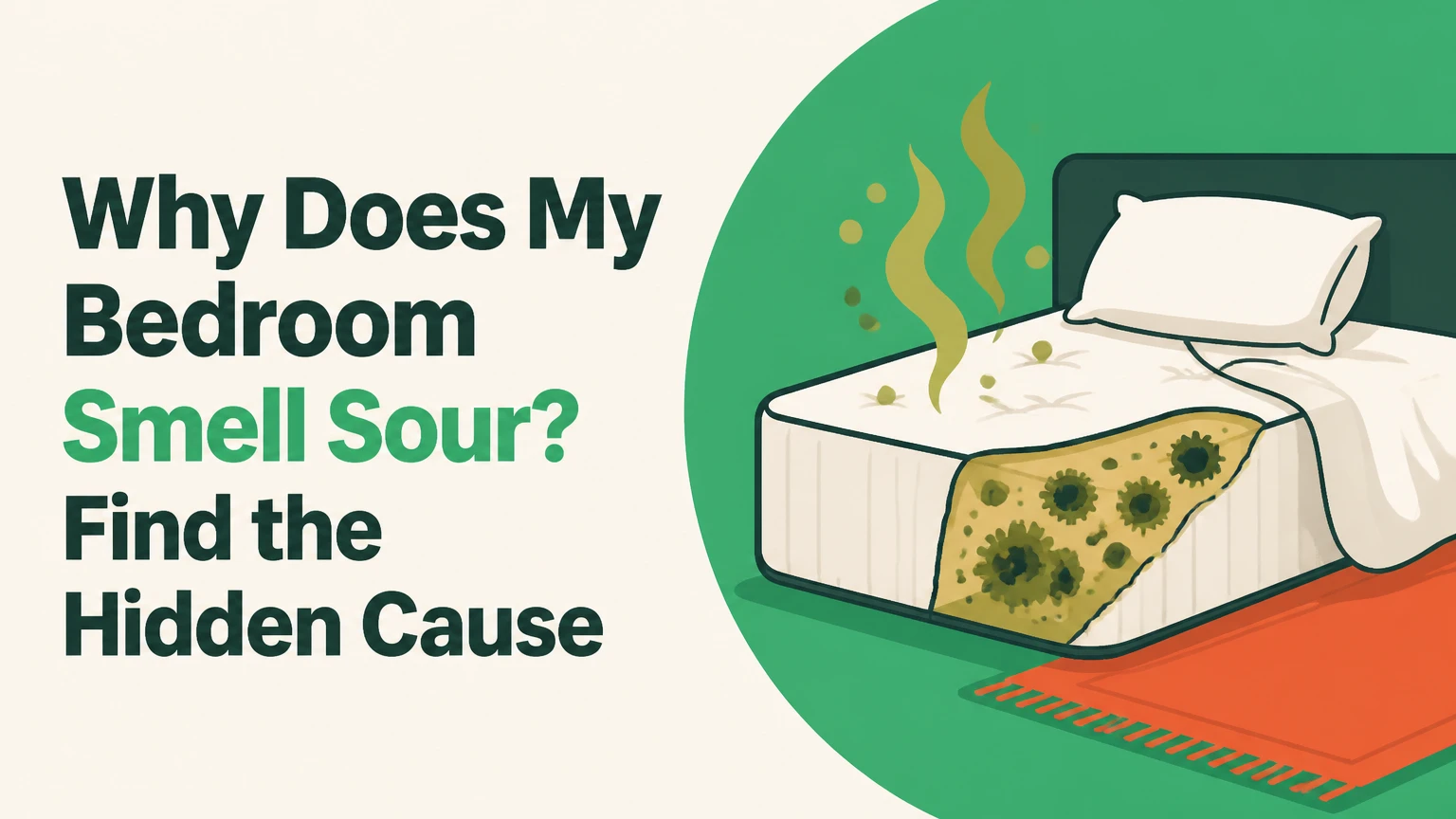
Why Does My Bedroom Smell Sour? Find the Hidden Cause
A sour bedroom odor is usually acidic-smelling volatile compounds created when bacteria break down sweat, skin oils, urine, or damp laundry, or when mold grows in persistently moist materials. The source is commonly a mattress, pillow, carpet, hamper, wall, closet, or air-conditioning component, and humidity above 50% makes recurrence more likely.
Key facts
A sour smell that is strongest after sleeping usually points to body oils, sweat, bedding, or a mattress.
A sour, musty odor that intensifies after rain or near an exterior wall warrants a moisture inspection.
Keep indoor relative humidity between 30% and 50%, measured with a hygrometer.
An air purifier captures airborne particles but does not dry a damp mattress, wall, or carpet.
Dry wet materials within 24-48 hours when possible; longer dampness increases microbial growth risk.
Never mix vinegar with bleach, ammonia, or hydrogen peroxide.
Why Does My Bedroom Smell Sour?
A sour bedroom smell is a source problem, not a fragrance problem. Bacteria metabolize sweat, sebum, shed skin, and food or urine residue on absorbent materials, while mold and other microorganisms release volatile organic compounds in damp areas. The same room can have both causes, especially when a humid mattress or carpet receives nightly body moisture.
The odor’s pattern provides useful evidence. A smell that returns after sleeping suggests textiles or the bed. A smell that appears after rain suggests leakage, condensation, or wet exterior materials. A smell concentrated inside a closet may come from shoes, stored laundry, or a cold wall. A smell that remains after all fabrics leave the room points toward construction materials, HVAC equipment, pests, or a drain.
The word “sour” is descriptive rather than diagnostic. Vinegar-like, fermented, sweaty, rancid, and musty odors overlap, so identify the strongest location and the conditions that make the odor change before buying a cleaner.
The odor pattern often identifies the source
| Odor pattern | Strongest clue | First inspection | Likely correction |
|---|---|---|---|
| Strong after waking | Sweat and body oils | Pillow, sheets, mattress protector | Wash bedding and clean or replace saturated layers |
| Strong after rain | Moisture intrusion | Exterior wall, window, carpet edge | Find and stop the water entry |
| Strong inside closet | Shoes or stored textiles | Floor, hamper, shoe rack | Launder, dry, and increase air movement |
| Strong when AC runs | Dirty coil or filter | Return grille, filter, condensate area | Replace filter and arrange HVAC service |
| Strong near floor | Carpet pad, urine, pest | Carpet edge, baseboard, under furniture | Use enzyme treatment or inspect for moisture |
| Strong only with door closed | Poor air exchange | Room humidity and concealed surfaces | Ventilate, dehumidify, and inspect hidden areas |
How Moisture and Microbes Create a Sour Odor
Moisture changes an ordinary bedroom into an odor reservoir because porous materials hold water and organic residue together. Relative humidity above 50% does not automatically mean mold exists, but it raises the drying burden and supports microbial activity on bedding, carpet, wood, paper, and dust.
Mold itself is not reliably identified by odor alone. The U.S. Environmental Protection Agency states that “mold can produce allergens, irritants, and, in some cases, potentially toxic substances,” but a smell cannot determine the species or health risk. EPA guidance prioritizes removing mold and correcting the moisture source over identifying a species through routine sampling.
Sweat creates a separate pathway. Fresh sweat is often less noticeable than the compounds produced when skin bacteria act on sweat, oils, and clothing residue. Hormonal changes, stress, some medicines, fever, and increased perspiration can alter the amount or composition of body odor. A bedroom may therefore smell sour even when the walls are dry.
Humidity, condensation, and damp materials are different
Relative humidity is the amount of water vapor in air compared with the maximum amount that air can hold at that temperature. Condensation occurs when humid air contacts a surface colder than its dew point. A room can show 45% humidity while a cold exterior wall, window frame, or mattress edge remains damp enough to support odor.
| Measurement or condition | Typical value | What it means | Action |
|---|---|---|---|
| Comfortable indoor humidity | 30%-50% RH | Lower odor and condensation burden | Maintain with ventilation or dehumidification |
| Investigation threshold | Above 50% RH | Dampness deserves attention | Check daily for one week |
| High-risk persistent range | Above 60% RH | Slower textile drying and greater mold risk | Run a dehumidifier and find moisture |
| Water-damaged porous material | Wet for more than 24-48 hours | Microbial growth becomes more likely | Dry promptly or obtain professional advice |
| Cold window or wall surface | Near dew point | Condensation can occur without a leak | Increase air circulation and reduce humidity |
Measure humidity with a digital hygrometer placed away from a window, supply vent, bathroom door, and direct sunlight. A single reading is weak evidence. Morning and evening readings over three to seven days show whether the problem is constant, weather-related, or caused by sleeping.
Expert insight: The most common diagnostic mistake is treating 50% RH as a mold switch. Odor depends on surface temperature, material moisture, ventilation, and available organic residue, not on one universal humidity number.
Which Bedroom Materials Commonly Hold the Smell?
Soft, porous materials retain odor longer than painted metal, glass, or sealed plastic because their fibers and cells absorb moisture and organic compounds. The mattress is frequently overlooked because sheets are washed while the mattress, box spring, bed frame joints, and floor beneath remain untreated.
| Material | Why odor persists | Practical inspection | Replacement or cleaning clue |
|---|---|---|---|
| Mattress | Sweat, sebum, skin, spills, slow drying | Smell each side and inspect seams | Replace for deep, recurring odor or visible contamination |
| Pillow | High nightly moisture near the face and scalp | Smell filling after washing case | Replace if lumpy, stained, or still sour when fully dry |
| Carpet and pad | Dust, spills, pet urine, trapped humidity | Check edges and under the bed | Pad often requires replacement after saturation |
| Curtains and upholstery | Low-frequency washing and condensation | Smell hems and folds | Launder according to care label |
| Hamper and shoes | Damp clothing and bacterial residue | Empty and smell the container | Wash hamper; dry shoes completely |
| Box spring and bed frame | Restricted airflow and hidden spills | Inspect underside and wall clearance | Professional cleaning may not remove embedded odor |
Why the mattress can smell sour after cleaning
A mattress can continue to smell because surface powder or spray does not remove contamination below the fabric, and excess liquid can make the interior wetter. Memory foam, latex, and thick quilted innerspring covers dry at different rates. A mattress that feels dry on top may remain damp internally.
Do not saturate a mattress with vinegar solution. Instead, strip the bed, vacuum slowly with an upholstery attachment, treat a small inconspicuous area, and use minimal moisture permitted by the manufacturer. Run a fan across the surface, expose both sides when the design allows it, and confirm complete dryness before replacing bedding.
A mattress protector prevents new contamination but does not extract old odor. Wash the protector weekly or according to its care instructions, and choose a breathable, washable design rather than an impermeable layer that traps perspiration.
How to Find the Exact Source
Source isolation is more reliable than spraying the entire room. Remove or seal one category at a time, observe the odor for several hours, and record whether humidity, sleep, rain, or HVAC operation changes the result.
- Remove all dirty laundry, shoes, towels, trash, food, and plant debris.
- Wash bedding and place it in a different dry area while the room is inspected.
- Smell the mattress, pillow, box spring, carpet edges, curtains, and closet separately.
- Move the bed and furniture 2-4 inches from exterior walls, then inspect baseboards and flooring.
- Check windows, roof-adjacent ceilings, plumbing walls, radiators, and supply or return vents.
- Measure humidity morning and evening for three to seven days.
- Operate the HVAC system and note whether the odor begins at a vent or return grille.
- If the source remains unclear, close the room for 2-4 hours, then compare the doorway, bed, closet, and wall zones without adding fragrance.
Use disposable gloves for visibly moldy or contaminated materials. Do not disturb suspect mold with a dry brush, fan, or aggressive vacuum before deciding whether the affected area is suitable for household cleaning.
Signs that distinguish common odor sources
| Source | Smell description | Timing or trigger | Confirming test |
|---|---|---|---|
| Sweat and sebum | Tangy, salty, fermented | Strongest after sleeping | Remove bedding and compare mattress surface |
| Damp mold or mildew | Musty, earthy, sour | Worsens after rain or closed-room periods | Inspect dampness and condensation |
| Urine or pet accident | Ammonia, sour, pungent | Strong near floor or warm humidity | UV light may reveal residue, but is not definitive |
| Sour laundry | Fermented fabric odor | Returns after washing or storage | Smell the fully dry load and washer gasket |
| Dead pest | Rotting, sickly, sulfur-like | Localized and progressively stronger | Inspect wall, ceiling, attic, and vents |
| HVAC contamination | Dusty, sour, or moldy airflow | Starts when fan or AC operates | Smell filter, return, coil access, and condensate area |
How to Remove the Odor Safely
Cleaning works only when the source is removable and dry. Odor absorbers can reduce a temporary smell, but they cannot correct a leaking window, wet carpet pad, contaminated mattress core, or moldy drywall.
Bedding, washable fabric, and laundry
Wash sheets, pillowcases, blankets, and mattress protectors using the hottest temperature allowed by the care label and a sufficient amount of detergent. Dry items completely before storage. A load that remains damp in the drum or sits overnight in a warm washer can develop a sour odor even when the wash cycle was adequate.
For persistent laundry odor, clean the washer gasket, detergent drawer, and drain filter according to the manufacturer’s instructions. Run the machine’s cleaning cycle, avoid overloading, and leave the door open after use. White vinegar in a rinse cycle may help with mineral or detergent residue, but it is not a substitute for detergent and should never contact chlorine bleach.
Carpet, upholstery, and hard surfaces
Vacuum carpet slowly, including under the bed and along baseboards. For a small organic spill, use a manufacturer-approved enzyme cleaner and keep the treated area ventilated until fully dry. Enzymes are useful for urine, sweat, and food proteins, but they do not remove a leak or reliably treat mold inside carpet padding.
For sealed hard surfaces, use a mild detergent solution, wipe with clean water where appropriate, and dry promptly. Do not paint over a stained or moldy wall. Coating hides evidence while moisture continues behind the finish.
| Method | Best target | Typical contact or drying time | Main limitation |
|---|---|---|---|
| Detergent and water | Sealed surfaces and washable covers | Dry within 2-6 hours | Weak against embedded mattress odor |
| Baking soda | Light surface odor on dry fabric | 30 minutes to overnight | Absorbs some odor but does not disinfect |
| Enzyme cleaner | Urine, sweat, food residue | Follow label, often 10-30 minutes | Requires complete drying; not a leak repair |
| Steam cleaning | Suitable carpet and upholstery | Often 6-24 hours drying | Excess water can worsen odor |
| Professional extraction | Saturated carpet or upholstery | 12-48 hours drying | Costs more and still requires source correction |
Baking soda is safer on many dry fabrics than liquid treatment, but check care instructions first and vacuum thoroughly. Do not combine baking soda with vinegar in the same application because the fizzing reaction largely neutralizes both materials before they can perform their intended roles.
Dehumidifier or Air Purifier: Which Helps More?
A dehumidifier is the better first purchase when humidity exceeds 50% or damp materials are involved. An air purifier with a HEPA filter can reduce airborne particles, including some mold spores, but it does not remove water from walls, carpet, bedding, or the air.
| Option | Primary function | Useful bedroom specification | Does it remove source moisture? | Typical USA price |
|---|---|---|---|---|
| Portable dehumidifier | Condenses water from air | 30-50 pint/day class, room-sized | Yes, from air | $150-$350 |
| HEPA air purifier | Filters airborne particles | CADR sized for room volume | No | $80-$300 |
| Box fan with filter | Increases filtration cheaply | MERV 13 filter, secure fit | No | $40-$100 |
| Hygrometer | Measures relative humidity | Digital RH display, ±3% typical | No | $10-$30 |
| HVAC service | Inspects coil, drain, and airflow | Licensed technician | Sometimes, if equipment is source | $100-$300 diagnostic |
Capacity labels vary by test conditions, so a basement-like damp bedroom may need a larger unit than the advertised square-foot rating suggests. Set the humidistat around 45%-50%, keep doors and windows closed while the unit operates, empty the tank safely, and clean the filter.
An air purifier becomes more valuable when allergies, dust, wildfire smoke, or airborne particles are the main concern. It cannot make a damp mattress safe, and its odor performance depends on activated carbon quantity. A thin carbon prefilter may reduce light odors, while serious chemical or microbial sources require removal.
What Does Professional Cleaning or Remediation Cost in the USA?
Typical U.S. costs vary by region, access, contamination, and whether materials can be cleaned or must be removed. A small textile cleaning job may cost less than $200, while hidden moisture, wall removal, or HVAC contamination can raise the project into the thousands.
| Service | Typical USA cost | Typical timeframe | Appropriate trigger |
|---|---|---|---|
| Hygrometer and DIY inspection | $10-$50 | 1-7 days | Unclear humidity or intermittent odor |
| Carpet cleaning | $100-$300 per room | 4-24 hours drying | Surface contamination without structural moisture |
| Mattress cleaning | $80-$250 | 6-24 hours drying | Light to moderate surface odor |
| HVAC diagnostic visit | $100-$300 | 1-3 hours | Odor begins when fan or AC runs |
| Mold inspection | $300-$800 | 1-3 hours, report later | Recurrent odor, water damage, or hidden-area concern |
| Mold remediation | $1,200-$3,750 typical | 1-5 days | Confirmed affected materials and moisture correction |
These are planning ranges, not guaranteed quotes. A contractor should explain the moisture source, affected materials, containment method, drying verification, and disposal plan. Testing is not always necessary for visible, limited mold when the source and cleanup method are clear, but a professional assessment is sensible for hidden cavities, repeated water intrusion, sewage contamination, or occupants with serious respiratory vulnerability.
The EPA generally recommends professional help when the affected mold area exceeds about 10 square feet, when HVAC systems may be contaminated, or when contaminated water involves sewage. Local rules, landlord duties, and insurance requirements can change the correct process.
When Is a Sour Smell a Health or Safety Concern?
A bedroom odor deserves prompt attention when it accompanies visible mold, damp building materials, repeated leaks, respiratory symptoms, sewage, or a strong chemical or gas-like smell. Most household odors are not emergencies, but no one should sleep in a room with ongoing water damage or suspected sewage contamination.
Leave the room and contact emergency services or the gas utility if the odor resembles rotten eggs or sulfur and could indicate natural gas. Do not operate electrical switches or create flames while investigating a possible gas leak.
Arrange medical advice if exposure coincides with wheezing, shortness of breath, persistent coughing, fever, or worsening asthma. The odor alone cannot diagnose mold illness, and home mold test kits rarely establish whether a room is safe. The practical priority is reducing exposure and correcting dampness.
Do not personally disturb extensive mold, heavily contaminated porous materials, or sewage-damaged contents without suitable training and protective controls. People with asthma, severe allergies, immune suppression, or chronic lung disease should use extra caution during cleanup.
Why Does the Smell Return After Cleaning?
A sour odor returns when the original reservoir remains damp or contaminated. Common hidden reservoirs include carpet padding, the underside of a mattress, a box spring, wall cavities, the back of a dresser, a washer gasket, an AC evaporator coil, and a condensate drain pan.
The recurrence interval is informative. A smell that returns within hours usually indicates an untreated source or rewetting. A smell that returns after several humid days suggests moisture control failure. A smell that returns only when HVAC operates shifts suspicion toward the filter, coil, drain pan, duct insulation, or a nearby return cavity.
Expert insight: Fragrance often creates a false negative. A scented spray can suppress perception for 30 minutes while adding volatile chemicals to the same air, so the controlled isolation test should occur with windows closed and fragrance products removed.
Recurrence diagnosis by timing
| Recurrence timing | Most likely explanation | Verification | Next step |
|---|---|---|---|
| Within 1-6 hours | Untreated porous reservoir | Smell mattress, pad, and upholstery | Clean, extract, or replace source |
| After overnight sleep | Body moisture and bedding | Use clean dry bedding for one night | Compare mattress and textiles |
| After rain | Leak or condensation | Inspect exterior wall and window | Repair water entry |
| After 2-3 humid days | High indoor RH | Log hygrometer readings | Dehumidify and improve airflow |
| Only during HVAC use | Coil, filter, or drain | Run fan briefly and inspect grille | Schedule HVAC diagnosis |
| After moving furniture | Hidden wall or floor dampness | Inspect behind and beneath furniture | Dry, repair, or obtain assessment |
What Should You Do Today?
Use a staged response so cleaning does not spread moisture or conceal evidence.
First 30 minutes
- Remove laundry, shoes, trash, towels, food, and plants.
- Strip the bed and place washable textiles in a dry area.
- Open the room to ventilation if outdoor air is drier.
- Set a hygrometer at bed height.
- Smell the mattress, pillow, carpet, closet, and vent separately.
Within 24 hours
- Wash and fully dry bedding.
- Vacuum the mattress surface, floor, and carpet edges.
- Inspect window frames, exterior walls, baseboards, and ceiling corners.
- Move furniture 2-4 inches from cold exterior walls.
- Run a dehumidifier if RH remains above 50%.
- Photograph leaks, stains, or visible growth before disturbing them.
During the next week
- Record humidity twice daily.
- Clean the washer gasket and replace an overdue HVAC filter.
- Check whether rain, sleep, laundry, or HVAC use changes the odor.
- Treat only confirmed organic residue with a compatible cleaner.
- Escalate recurring dampness, extensive growth, or concealed damage.
An HVAC filter commonly needs replacement every 1-3 months in a dusty home, with the manufacturer’s rating and household conditions taking priority over a rigid calendar. A filter can reduce circulating dust, but it cannot correct a wet coil or drain pan.
Frequently Asked Questions About why does my bedroom smell sour
Can a sour bedroom smell come from a dead animal?
Yes. A dead rodent, bird, or insect in a wall, ceiling, attic, crawlspace, or duct can create a localized sour or rotting odor that grows stronger over several days. If the smell is strongest near one vent or wall and does not change after textile cleaning, contact pest control or building maintenance rather than opening the cavity yourself.
Why does my room smell sour only in the morning?
Morning odor usually reflects overnight accumulation of sweat, carbon dioxide, and moisture in poorly ventilated bedding and mattresses. Compare one night with freshly washed, fully dry bedding and the bedroom door slightly open. If the smell remains on the mattress or worsens when humidity rises, inspect the bed and measure RH before replacing anything.
Can a dirty air conditioner make a bedroom smell sour?
Yes. A dirty filter, wet evaporator coil, contaminated drain pan, or blocked condensate line can release sour or musty air when the system runs. Replace the filter if due, but do not spray household disinfectant into the unit. Have an HVAC technician inspect coils, drainage, and internal insulation if the odor starts with cooling.
Should I replace my mattress because it smells acidic?
Replace a mattress when the odor is deep and persistent after thorough dry cleaning, the foam or padding was soaked, visible contamination is embedded, or the mattress is approximately 8-10 years old and losing support. A washable protector and improved humidity can extend a clean mattress, but they cannot reverse contamination inside its core.
Will a bowl of vinegar remove the smell from my bedroom?
A bowl of vinegar may temporarily alter perception near the container, but it does not remove moisture, bacteria, mold, urine, or embedded textile residue. Source removal, washing, extraction, drying, and humidity control provide more dependable results. Never use vinegar near chlorine bleach or products containing hypochlorite.
What should renters do about a recurring sour odor?
Renters should document dates, humidity readings, photographs, leaks, and cleaning attempts, then notify the landlord or property manager in writing. Do not paint over suspected mold or remove wall materials without permission. If the odor involves sewage, persistent water intrusion, or unsafe living conditions, consult the local housing authority and follow the lease and state requirements.
Conclusion
The answer to why does my bedroom smell sour is usually a damp or contaminated reservoir, especially bedding, a mattress, carpet padding, laundry, or a concealed building surface. Track when the smell appears, measure humidity, isolate materials, clean only compatible surfaces, and correct leaks or HVAC problems. If the odor returns after drying and source removal, obtain a qualified inspection rather than adding more fragrance.