
How to Make House Smell Good Naturally: Safe, Effective Methods
To make a house smell good naturally, first remove odor sources, dry damp materials, ventilate with outdoor air, and clean fabrics and drains before adding plant-based fragrance. The safest effective sequence is source control, humidity management, then a low-intensity option such as herbs, citrus, unscented charcoal, or a carefully selected diffuser.
Key facts at a glance
Natural fragrance can contain volatile organic compounds, so “plant-derived” does not automatically mean safe for every person or pet.
Indoor relative humidity is best kept around 30%-50%; persistent levels above 60% support musty odors and mold growth.
A monitored simmer pot costs typically $1-$3 per use and scents a kitchen for roughly 2-4 hours.
Activated charcoal removes some odors without adding fragrance, but it cannot repair mold, sewage, smoke, or water damage.
Essential oils can harm cats, birds, and other animals even when an oil is safe for some dogs.
The highest-return action is usually cleaning the odor reservoir, not increasing fragrance intensity.
What Does Natural Home Fragrance Mean?
Natural home fragrance uses plant materials, essential oils, waxes, herbs, spices, or other minimally processed ingredients to alter the smell of indoor air. Citrus peel, rosemary, cinnamon, beeswax candles, and essential oils all release aromatic molecules, but their safety and persistence differ substantially.
“Natural” is not a regulatory guarantee that a product contains no synthetic ingredients. A label can use terms such as clean, green, or natural without identifying every fragrance component. Check the ingredient list, safety data, allergen disclosures, and intended use instead of relying on packaging language.
The Environmental Protection Agency states that “the best way to improve indoor air is to eliminate or reduce the individual sources of pollution.” That principle applies to odor too. Fragrance changes perception; cleaning, ventilation, filtration, and moisture control change the underlying indoor environment.
Why do plant materials create a smell?
Plant materials release volatile compounds into the air, where they reach olfactory receptors in the nose. Heat, airflow, exposed surface area, and molecular volatility determine how quickly a scent becomes noticeable and how long it remains detectable.
A sliced orange releases aroma faster than a whole orange because cutting increases exposed surface area. A simmer pot releases scent quickly because heat and steam carry volatile compounds through nearby air. Reed diffusers work more slowly because liquid travels through reeds and evaporates at room temperature.
How to Make House Smell Good Naturally in Six Steps
A reliable natural deodorizing routine takes about 30-90 minutes for an ordinary room, costs $0-$15 when supplies are already available, and has low difficulty. Source identification determines success more than the fragrance selected, because scent layered over wet laundry, a dirty bin, or a contaminated drain usually creates a heavier combined odor.
| Before starting | Typical requirement | Success standard |
|---|---|---|
| Time | 30-90 minutes | Odor source cleaned or isolated |
| Cost | $0-$15 | Existing household supplies used first |
| Supplies | Mild detergent, microfiber cloths, vacuum | No visible residue remains |
| Optional materials | Orange peel, herbs, charcoal bag | Fragrance added only after cleaning |
| Safety check | Pets, children, smoke alarms, outdoor air | Method matches household risks |
Step 1: Find the odor source
Walk the house with the HVAC system off for 10 minutes, then inspect the kitchen bin, sink drains, dishwasher filter, laundry hamper, shoes, rugs, upholstery, bathrooms, closets, and HVAC return grille. A smell that returns within an hour usually comes from a reservoir rather than from stale air alone.
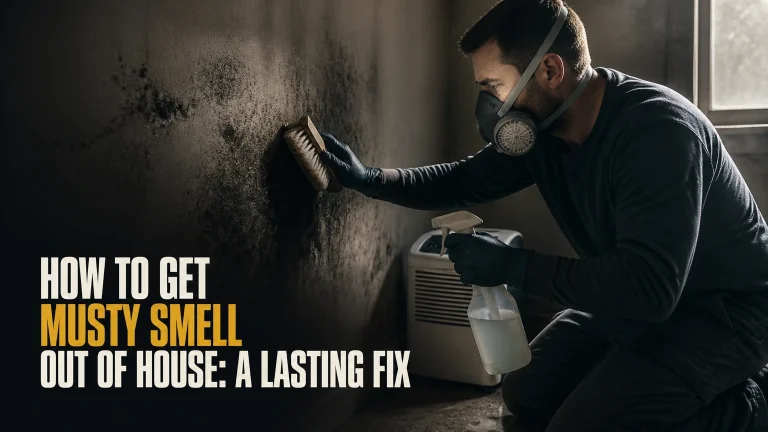
Use a clean paper towel to check damp corners, cabinet bases, and the underside of rugs. Persistent sewage odor, visible mold, a dead-animal smell, or smoke contamination requires repair or professional remediation rather than fragrance.
You will know it worked when: the odor becomes weaker before any scent product is used.
Common mistake: spraying fragrance throughout the house before locating the strongest room.
Step 2: Ventilate strategically
Open windows on opposite sides of the home for 10-15 minutes when outdoor air is clean, dry, and reasonably comfortable. Cross-ventilation removes odor molecules faster than opening one window, while a bathroom exhaust fan can pull air from adjacent rooms toward the outdoors.
Do not ventilate during wildfire smoke, high outdoor pollution, heavy rain, or extreme humidity. The American Lung Association advises checking local air-quality conditions during smoke events; outdoor air can worsen indoor conditions when particulate pollution is elevated.
You will know it worked when: the room smells neutral rather than strongly perfumed after the windows close.
Common mistake: running a window fan that pulls smoky or humid air indoors.
Step 3: Clean hidden odor sources
Wash trash cans with warm water and detergent, rinse them, and dry them fully before replacing the liner. Clean the dishwasher filter according to the appliance manual, wipe refrigerator seals, and remove food residue from the garbage disposal splash guard.
For a drain, flush with hot tap water and use a mechanical drain brush or an appropriate enzyme drain product. The commonly repeated mixture of baking soda followed by vinegar creates carbon dioxide and water, but the acid-base reaction neutralizes much of both materials, so it is not a dependable substitute for physical cleaning.
Never mix vinegar with chlorine bleach or commercial drain cleaners. Toxic gases or dangerous reactions can result.
You will know it worked when: the odor does not return after the drain or bin dries.
Common mistake: pouring boiling water into PVC plumbing or using several drain chemicals together.
Step 4: Treat fabrics carefully
Vacuum rugs, carpet edges, sofa crevices, pet bedding, and curtains before applying any deodorizer. For a washable fabric, launder according to its care label and dry it completely. For a dry-clean-only textile, use ventilation and professional cleaning rather than saturating the material.
Baking soda can absorb some surface odor in dry carpet. Apply a light layer, typically 1 cup per 100 square feet, leave it for 30-60 minutes, and vacuum thoroughly. Avoid heavy applications on dense carpet or upholstery because fine powder can enter equipment and leave residue.
A 2022 review in Indoor Air associated indoor dampness and mold exposure with respiratory symptoms, which is why musty carpet should be dried and inspected rather than repeatedly deodorized.
You will know it worked when: the fabric smells neutral after vacuuming and remains dry to the touch.
Common mistake: covering a damp rug with powder, which can trap moisture below the surface.
Step 5: Control humidity and airflow
Measure relative humidity with an inexpensive digital hygrometer in bedrooms, bathrooms, and the lowest floor. Aim for approximately 30%-50%; use air conditioning or a dehumidifier when readings remain above 60%, especially near cool walls and closets.
Dry wet towels promptly, run the bathroom exhaust fan during bathing and for 20-30 minutes afterward, and leave space behind furniture on exterior walls. Clean or replace HVAC filters according to the equipment manual, commonly every 1-3 months for standard disposable filters.
You will know it worked when: the musty odor decreases over several days without additional fragrance.
Common mistake: adding a humidifying diffuser to an already damp room.
Step 6: Add a low-intensity natural scent
Choose one method, use the smallest effective amount, and scent one room before scenting the entire house. A light aroma is easier to maintain than an intense one, and lower exposure reduces the chance of headaches, irritation, or animal toxicity.
A simmer pot provides the fastest noticeable result. A charcoal bag adds no fragrance but can reduce some localized odors. Herbs in water, dried citrus peel, or a properly labeled commercial product offer alternatives when essential oils are unsuitable.
You will know it worked when: the fragrance is noticeable upon entering but does not dominate after 10 minutes.
Common mistake: combining candles, diffuser oil, room spray, and incense, which creates excessive fragrance and makes the original source harder to diagnose.
Which Natural Method Fits Each Room?
The best method depends on heat, ventilation, room size, fire exposure, pets, and whether the objective is odor removal or fragrance. Simmer pots suit supervised kitchen use, charcoal suits closets and small odor zones, and passive reeds suit small rooms where a continuous low-level scent is acceptable.
| Method | Typical USA cost | Typical duration | Best location | Main limitation |
|---|---|---|---|---|
| Simmer pot | $1-$3 per use | 2-4 hours | Kitchen, living area nearby | Requires continuous supervision |
| Charcoal bag | $5-$15 each | 6-24 months | Closet, shoe area, bathroom | Adds no pleasant scent |
| Reed diffuser | $15-$40 | 1-3 months | Small bathroom, entryway | Oil spill and pet-access risk |
| Ultrasonic diffuser | $20-$60 device | 3-8 hours per fill | Occupied room with supervision | Requires cleaning and water |
| Soy or beeswax candle | $10-$35 | 30-60 burn hours | Living room with supervision | Open flame and soot risk |
| Fresh herbs and citrus | $1-$5 | 1-3 days refrigerated | Kitchen, short-term use | Spoils and needs replacement |
When is a simmer pot the best option?
A simmer pot is the strongest short-term option for a kitchen or nearby living area because heated water disperses aromatic compounds rapidly. Add 1 liter of water, one sliced orange, two cinnamon sticks, and a small rosemary sprig to a saucepan, bring it briefly to a boil, then maintain the lowest simmer.
Keep the pot attended, check the water every 20-30 minutes, and turn off the burner before the pan becomes shallow. Do not leave it running while sleeping or leaving the home. Use a timer as a backup, not as a replacement for supervision.
Does activated charcoal make a house smell good?
Activated charcoal can reduce some localized odors, but it does not make a house smell fragranced. Charcoal adsorbs certain molecules onto its porous surface, with effectiveness limited by airflow, humidity, contaminant concentration, and the amount of charcoal present.
Place a 200-500 gram bag near shoes, a litter-box enclosure, or a small cabinet. Recharge only if the manufacturer specifically permits it, because sunlight instructions vary by product. Replace a bag that remains odor-laden after its stated service period.
Are reed diffusers better than essential-oil diffusers?
Reed diffusers provide passive, continuous scent without electricity or water, while ultrasonic diffusers provide stronger adjustable output for several hours. Reed diffusers generally suit small rooms; ultrasonic models require more cleaning and create an aerosolized water-and-oil output.
Do not assume sweet almond oil plus essential oil is an effective reed formulation. Vegetable carrier oils can move poorly through reeds and may become rancid. A commercial diffuser base designed for reeds usually performs more consistently, and the container should remain upright and inaccessible to children and animals.
What Is Safe Around Pets and Children?
The safest pet-friendly odor strategy is source removal, ventilation, dry materials, and unscented activated charcoal. Essential oils require special caution because cats, birds, rabbits, and other animals can respond differently from humans; veterinary guidance is more reliable than a generic online “pet-safe oil” list.
The ASPCA warns that concentrated essential oils can harm pets through ingestion, skin exposure, or inhalation. Tea tree, eucalyptus, peppermint, wintergreen, cinnamon, clove, and many citrus oils deserve particular caution, especially around cats and birds. Never apply an essential oil directly to an animal.
| Household situation | Lower-risk first choice | Avoid or restrict | Reason |
|---|---|---|---|
| Cat household | Ventilation, cleaning, charcoal | Essential-oil diffusion | Cats metabolize some compounds poorly |
| Bird household | Cleaning, fresh outdoor air | Aerosols, candles, diffusers | Birds have highly sensitive respiratory systems |
| Dog household | Source control, limited passive scent | Accessible oils and spills | Ingestion and skin exposure remain hazards |
| Young children | Herbs, dry charcoal out of reach | Open flames and loose oils | Burn, ingestion, and spill risks |
| Asthma or fragrance sensitivity | Fragrance-free cleaning and filtration | Strong scent layering | Fragrance can trigger symptoms in some people |
Candles, incense, and heated oils also affect indoor air through combustion or thermal emissions. A fragrance-free home is the correct solution when an occupant develops coughing, wheezing, headaches, eye irritation, or nausea after scenting.
Which Natural Methods Cost the Least Over Time?
Kitchen scraps and existing herbs cost the least per use, while charcoal usually has the lowest maintenance burden. A diffuser has a higher initial cost but allows adjustable output; candles cost more per hour and introduce an open flame.
| Option | Initial purchase | Typical recurring cost | Maintenance | Practical monthly estimate |
|---|---|---|---|---|
| Simmer pot | $0-$10 saucepan | $4-$20 | Water and ingredients | $4-$20 |
| Charcoal bags | $5-$30 | $0-$15 | Replace or recharge | $0-$5 |
| Reed diffuser | $15-$40 | $5-$20 | Turn reeds, replace base | $5-$20 |
| Ultrasonic diffuser | $20-$60 | $3-$15 | Clean basin weekly | $3-$15 |
| Candle | $10-$35 | $10-$70 | Trim wick, monitor flame | $10-$70 |
| Houseplant | $5-$25 | $0-$10 | Water and light | $0-$10 |
What Can Houseplants and Herbs Actually Do?
Houseplants can add visual interest and occasional floral fragrance, but ordinary houseplants should not be treated as whole-home air purifiers. The 1989 NASA Clean Air Study examined plants in sealed chambers, conditions that do not represent normal homes with ventilation, furnishings, and changing pollutant loads.
Fragrant plants such as jasmine, gardenia, lavender, and scented geranium need appropriate light and may not produce a strong indoor aroma year-round. Boston fern and spider plant are common indoor plants, but they primarily provide greenery rather than reliable fragrance.
Fresh rosemary, mint, basil, or lavender can scent a kitchen briefly when placed in water or gently bruised. Replace cut herbs when they wilt or develop a sour smell. Never keep decaying plant material in a vase and expect it to deodorize the room.
Why Does Natural Fragrance Sometimes Fail?
Natural fragrance fails when the source is active, humidity is high, the scented method is too weak for the room, or the nose adapts after several minutes. Fragrance also cannot remove mold contamination, sewage leakage, smoke residue, or a dead animal inside a wall.
| Symptom | Likely cause | Correct response | Expected timeframe |
|---|---|---|---|
| Musty odor returns daily | Damp wall, carpet, or basement | Find and repair moisture source | 1-14 days after repair |
| Drain smells after cleaning | Biofilm or trap problem | Brush, enzyme treatment, or plumber | Same day to 1 week |
| Reed diffuser is weak | Clogged reeds or cold room | Replace reeds, rotate once | 1-24 hours |
| Simmer pot smells scorched | Low water or high heat | Discard contents and wash pan | Immediate |
| Candle leaves black marks | Long wick or draft | Trim wick to about 6 mm | Each burn |
| Diffuser stops misting | Mineral scale or low water | Clean basin and ultrasonic plate | 5-10 minutes |
A reed diffuser that remains weak after replacing the reeds may have an unsuitable base, a narrow room with poor airflow, or a scent formulation intended for another device. A diffuser basin should be emptied after use and cleaned according to the manufacturer’s instructions; diluted white vinegar can help remove mineral scale when the manual permits it.
Room-by-Room Recommendations
Kitchen odors respond best to source removal, ventilation, a clean range hood, and a short supervised simmer pot. Bathrooms need exhaust ventilation, dry towels, drain cleaning, and humidity control before any passive fragrance.
| Room | First action | Natural add-on | Avoid |
|---|---|---|---|
| Kitchen | Clean bin, filter, and disposal | Orange, rosemary, cinnamon simmer pot | Unattended stovetop |
| Bathroom | Dry surfaces and run exhaust | Charcoal bag or mild reed diffuser | Fragrance over mildew |
| Bedroom | Wash bedding and air mattress | Dried lavender nearby | Strong diffuser during sleep |
| Entryway | Wash shoes and floor mats | Charcoal near shoe storage | Spilled oils on flooring |
| Basement | Measure humidity and inspect leaks | Charcoal after drying | Candles in poorly ventilated areas |
| Living room | Vacuum upholstery and rugs | One candle or diffuser | Layering four scent products |
For smoke odor, wash removable fabrics, clean hard surfaces, replace contaminated filters, and consider professional restoration. For pet odor, use an enzymatic cleaner matched to the affected material; baking soda alone cannot break down all urine residues.
Common Mistakes and How to Fix Them
- Masking a wet material: Remove the fabric, dry the area, and inspect the floor beneath it.
- Using too much baking soda: Vacuum thoroughly and use a lighter measured layer next time.
- Leaving a simmer pot unattended: Turn off the burner, discard scorched ingredients, and inspect the cookware.
- Diffusing around sensitive animals: Stop the device, ventilate, and contact a veterinarian if symptoms appear.
- Mixing cleaning chemicals: Stop combining products, leave the area, and seek poison-control advice after exposure.
- Ignoring a recurring musty smell: Measure humidity and investigate leaks, condensation, or hidden mold.
The practitioner rule is simple: if a smell returns after ventilation, the source remains. If fragrance intensity must keep increasing, stop adding scent and reassess the room.
Frequently Asked Questions
Is vinegar a natural air freshener?
Vinegar can help clean some hard surfaces, but its sharp acetic-acid odor does not reliably remove every household odor. Use diluted vinegar only on materials compatible with acid, never on natural stone, and never mix it with bleach or drain chemicals. Ventilation and source cleaning produce a more predictable result.
How long should I leave baking soda on carpet?
Leave a light baking-soda layer on dry carpet for about 30-60 minutes, then vacuum slowly in multiple directions. Longer contact does not guarantee better deodorizing, and heavy powder can enter the vacuum or remain in dense carpet. Damp carpet requires drying and source investigation instead.
Can essential oils remove cooking odors?
Essential oils can add a competing aroma, but they do not remove grease particles or the source of cooking odors. Clean the range hood, backsplash, textiles, and trash first, then use a small amount of fragrance if household members and animals tolerate it.
Should I use a diffuser every day?
Daily diffuser use is unnecessary when the home has a persistent odor problem and may increase exposure to irritating fragrance compounds. Clean the device regularly, follow its oil and water limits, ventilate the room, and stop use if people or pets show respiratory, skin, or behavioral changes.
What is the best natural scent for a small bathroom?
A clean, dry bathroom with a charcoal bag or a low-output reed diffuser is usually the most practical combination. Citrus, rosemary, and eucalyptus may smell fresh, but essential oils can pose animal risks and cannot compensate for poor ventilation, a leaking toilet seal, or mildew.
How can I make my house smell good without essential oils?
Clean odor reservoirs, ventilate, dry damp materials, wash textiles, and use herbs, citrus peel, unscented charcoal, or a supervised simmer pot. These options avoid concentrated oil exposure, although simmer pots still require heat supervision and herbs must be replaced before they spoil.
The Bottom Line
To make a house smell good naturally, clean the source, ventilate for 10-15 minutes when outdoor air is suitable, keep indoor humidity near 30%-50%, and add one modest fragrance method afterward. Start with charcoal or herbs for sensitive households, use simmer pots only while present, and treat recurring musty, sewage, smoke, or animal odors as repair problems rather than scent problems.