
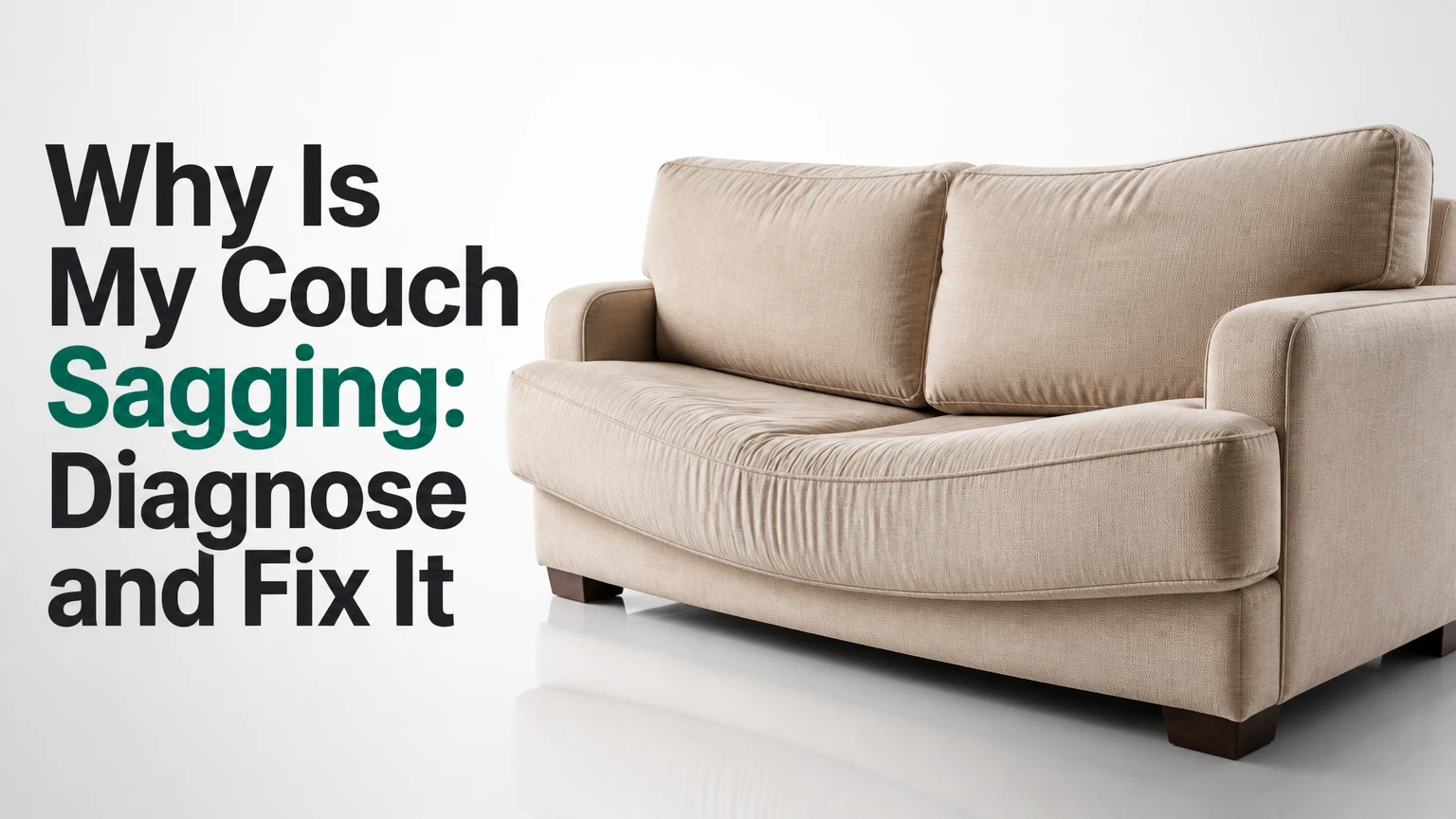
Why Is My Couch Sagging: Diagnose and Fix It
A couch sags because its cushion foam, suspension, frame fasteners, or structural rails have lost their ability to support weight. A removable cushion that feels flat usually needs new foam, while a dip in the fixed seat points to stretched webbing, a broken spring, detached staples, or a damaged frame. The symptom location identifies the repair.
Key Facts at a Glance
- Cushion sagging and base sagging are different failures and require different repairs.
- A localized sinkhole usually indicates a broken spring, detached webbing, or compressed cushion core.
- A couch that dips across its entire width may have a missing center leg or cracked front-to-back support.
- High-resilience foam around 2.0-2.5 lb per cubic foot generally lasts longer than low-density foam in daily-use seating.
- A rigid board can improve short-term height but may concentrate force and accelerate suspension or frame damage.
- Reupholstery is usually easier to justify when the frame is square, dry, jointed tightly, and free of insect or water damage.
Why Is My Couch Sagging?
Couch sagging results from permanent compression, stretched suspension, loose attachments, or a weakened frame. Daily sitting concentrates thousands of loading cycles in the same seat locations, especially where one person prefers to sit, and those repeated cycles gradually reduce foam recovery and suspension tension.
The three load paths are the frame, suspension, and cushion core. The frame carries the overall structure; springs or webbing distribute force across the seat opening; foam, fiber, or feathers spread pressure under the upholstery. Failure in one layer increases stress on the others.
A heavy user, frequent lounging, children jumping, pets, poor assembly, and a missing center support can shorten the useful life of a sofa. Moisture can also soften wood, damage adhesives, and encourage odor or mold inside cushions.
How Is a Couch Support System Built?
A sofa seat normally combines a rigid frame, a flexible suspension layer, and a resilient cushion core. The visible dip does not reveal which layer failed, so diagnosis starts by separating the cushion from the upholstered deck whenever the design allows it.
| Layer | Common materials | Typical failure | Visible symptom |
|---|---|---|---|
| Frame | Kiln-dried hardwood, plywood, steel | Cracked rail, loose joint, warped wood | Whole seat dips or twists |
| Suspension | Steel springs, rubber webbing, jute webbing | Broken clip, stretched strap, snapped tie | Base feels low or uneven |
| Cushion core | Polyurethane foam, fiber, feathers, pocketed coils | Compression loss, clumping, coil collapse | Cushion is flat or wrinkled |
| Upholstery attachment | Staples, tacks, clips, adhesive | Pullout, tearing, loosened fabric | Fabric deck hangs downward |
The frame should remain square when viewed from the front and side. If one front corner lifts when the opposite corner is pressed, the frame may be twisted or a leg may be improperly installed.
What Does the Suspension Do?
Suspension supports the cushion between the front and rear frame rails. Sinuous springs create repeated steel arcs, hand-tied coils distribute force through twine, and webbing creates a tensioned fabric or rubber platform.
Suspension should flex several inches under normal weight and return without a permanent low spot. A spring that scrapes wood, a strap that feels loose, or staples pulled from the rail indicates a base problem rather than ordinary cushion wear.
Is the Cushion or the Couch Base Sagging?
The cushion is the likely fault when the seat is flat, wrinkled, lumpy, or slow to regain height while the deck underneath remains level and taut. The couch base is the likely fault when the cushion looks reasonably full but drops into a depression below, especially with squeaking or exposed torn fabric.
Remove each seat cushion and place it on a clean, flat floor. Measure its height at the front edge and center, then compare those measurements with an unworn cushion or the original specification. A center height loss of about 1-2 inches can feel substantial in soft foam.
| Observation | Likely failed part | Simple test | Usual remedy |
|---|---|---|---|
| Cushion flat on a level deck | Foam or fiber core | Press and release center | Replace foam or redistribute fill |
| Cushion full, deck visibly bowed | Webbing or springs | Press deck with cushions removed | Repair suspension |
| One deep hole | Local spring or strap | Compare adjacent seat zones | Replace attachment or spring |
| Entire sofa low in middle | Center support or rail | Check legs and underside | Install support or repair frame |
| Seat drops with a squeak | Spring clip or joint | Apply pressure while listening | Repair clip, spring, or joint |
A quick test is to place a straightedge across the exposed deck. A level deck with a low cushion points toward filling; a bowed deck points toward suspension or frame damage.
How Do You Diagnose a Sagging Couch Safely?
Inspect the sofa in five stages: remove cushions, check legs, examine the deck, identify the suspension type, and inspect the frame without cutting upholstery. Use a flashlight, tape measure, straightedge, screwdriver, and phone camera; wear gloves because broken springs and staples can be sharp.
- Remove cushions and covers if permitted. Photograph the original arrangement before opening zippers.
- Check every leg. Tighten loose legs and confirm that the center leg touches the floor.
- Press the deck by hand. Compare the sagging area with a firm section and listen for scraping or popping.
- Photograph the underside. Look for detached webbing, displaced springs, pulled staples, cracked rails, and missing fasteners.
- Check frame geometry. Measure diagonals or compare both front corners for twisting.
- Stop if the frame is cracked or the spring is under tension. Upholstery professionals have the clamps and tools needed to release and replace loaded components safely.
Do not remove upholstery staples from a valuable antique, leather sofa, or manufacturer-warranted couch before checking the warranty and repair instructions.
Which Suspension Type Is in My Couch?
Most couches use sinuous springs, webbing, or a coil system; eight-way hand-tied construction is less common and usually appears in traditional high-end furniture. The easiest identification method is viewing the underside or lifting the dust cover only where the manufacturer provides access.
| Suspension | Construction | Typical service life | Typical repair cost in the USA |
|---|---|---|---|
| Eight-way hand-tied | Coil springs tied in eight directions | 15-25 years | $500-$1,500 per sofa |
| Sinuous springs | Horizontal S-shaped steel wires | 8-15 years | $150-$500 per sofa |
| Rubber or nylon webbing | Interwoven straps across rails | 5-12 years | $150-$600 per sofa |
| Pocketed seat coils | Individual coils inside foam | 8-15 years | $400-$1,200 per sofa |
These are typical U.S. repair ranges, not guaranteed quotes. Labor, access, fabric removal, metropolitan rates, sofa width, and replacement materials can change the total substantially.
What Causes Sinuous Springs to Fail?
Sinuous springs fail when clips detach, the wire fatigues, or a connecting cord breaks. A single detached clip can create a sharp local depression, while several failed springs cause a broad low seat and may produce metal-on-wood squeaking.
An 8-gauge spring is thicker than a 10-gauge spring and generally tolerates heavier use, but gauge alone does not determine durability. Rail strength, clip design, spring spacing, and the quality of installation matter just as much.
Why Does Webbing Stretch?
Webbing loses tension because rubber elastomers age, nylon creeps under sustained load, jute fibers deform, or staples pull from the rail. Webbing failure often feels softer across a complete seating zone rather than producing one isolated hole.
Webbing is useful in thin contemporary sofa designs, but inexpensive straps can require replacement sooner under daily family use. A repairer should replace the entire affected panel with compatible webbing instead of tightening one strap while leaving neighboring straps worn.
What Foam Density Should a Replacement Cushion Have?
For everyday seating, choose replacement polyurethane foam around 2.0-2.5 lb per cubic foot, with a firmness selected for the cushion thickness and user preference. Foam density measures material weight per cubic foot, while firmness measures resistance to compression; density does not automatically mean a firmer cushion.
| Cushion use | Typical density | Typical firmness range | Expected feel |
|---|---|---|---|
| Occasional chair | 1.8-2.0 lb/ft³ | 25-35 ILD | Softer, moderate recovery |
| Daily living-room sofa | 2.0-2.5 lb/ft³ | 30-40 ILD | Balanced support |
| Heavy family use | 2.5-3.0 lb/ft³ | 35-45 ILD | Firmer, better recovery |
| Seat topper or wrap | 1.8-2.5 lb/ft³ | 20-35 ILD | Comfort adjustment |
ILD means indentation load deflection, a firmness measure used by foam suppliers. Ask for the manufacturer’s density and ILD rather than buying foam described only as “high density.”
Measure the old foam after removing the cover, not while compressed inside it. Order the replacement approximately 1/2 inch wider and longer only if the cover requires compression for a smooth fit; excessive oversizing can stress seams and distort the cushion.
Can You Fix a Sagging Couch Yourself?
You can usually fix a loose leg, replace cushion foam, add a temporary cushion insert, or repair accessible webbing with moderate DIY skill. Spring replacement, load-bearing frame repair, eight-way hand-tied work, and leather upholstery are better handled by an upholsterer because incorrect tension can damage the rail or injure the person making the repair.
Before You Start
| Requirement | Typical value |
|---|---|
| Inspection time | 10-20 minutes |
| Cushion foam replacement | 30-90 minutes per cushion |
| Basic tools | Flashlight, tape measure, screwdriver, gloves |
| Temporary support | $15-$60 |
| New seat foam | $60-$180 per cushion |
| Skill level | Beginner for cushions, intermediate for webbing |
Step 1: Correct the Simple Load Problems
Tighten loose legs, install the original center support, and level the sofa on the floor. Do not use folded cardboard or unstable furniture shims because they can shift under a seated load.
You will know this step worked when the frame sits evenly and the center support remains in contact with the floor. The common mistake is treating a missing leg as a cushion problem.
Step 2: Restore the Cushion Core
Open the cushion zipper, remove the old insert, and measure length, width, and thickness. Replace degraded foam with an appropriate density, then wrap it in a thin polyester or Dacron layer if the original cushion used one.
You will know the repair worked when the cover is smooth without excessive force and the cushion returns to shape after a 30-second compression. Do not pack loose fiber into a foam cushion, because fiber migrates and creates lumps.
Step 3: Repair Accessible Webbing
Remove the dust cover only when the fabric is replaceable and the sofa is not under warranty. Photograph strap spacing, remove failed fasteners, install matching webbing with even tension, and use upholstery-grade staples in sound wood.
You will know the repair worked when the deck supports equal pressure across the seat without a single tight ridge. The common mistake is tightening one strap until it becomes much firmer than its neighbors.
Step 4: Replace a Damaged Spring or Clip
Replace a broken clip with the correct spring hardware, not a household screw or wire substitute. Keep hands clear of spring ends and use professional tools for tensioned components.
You will know the repair worked when the spring sits parallel to its neighbors and makes no contact noise during repeated pressure. Stop if the rail splits, the spring is severely bent, or access requires removing substantial upholstery.
How Much Does It Cost to Repair Couch Sagging?
Typical U.S. costs range from $15 for a temporary support insert to more than $1,500 for extensive reupholstery and frame work. Cushion foam is often the most economical permanent repair, while suspension and frame repairs become less attractive when fabric, padding, and several structural parts also need replacement.
| Repair | Typical material cost | Typical labor cost | Typical total |
|---|---|---|---|
| Tighten or replace leg | $5-$40 | $0-$100 | $5-$140 |
| Foam cushion insert | $50-$180 | $0-$100 | $50-$280 |
| Webbing replacement | $40-$150 | $150-$450 | $190-$600 |
| Sinuous spring repair | $30-$150 | $150-$500 | $180-$650 |
| Frame rail repair | $50-$250 | $300-$900 | $350-$1,150 |
| Full reupholstery | $300-$900 materials | $700-$2,000 labor | $1,000-$2,900 |
Get an itemized quote that separates foam, suspension, frame, fabric removal, sewing, delivery, and tax. A repair that costs more than roughly 50%-70% of a comparable replacement sofa deserves a condition-based comparison rather than an automatic approval.
Are Sofa Support Boards Safe?
A support board is safe only as a temporary, correctly sized aid when the frame and suspension remain structurally sound. A rigid board placed over a broken spring or severely stretched deck transfers body weight to fewer contact points, which can worsen rail cracking, spring deformation, and uncomfortable pressure.
Use a ventilated, purpose-built support panel with rounded edges and the manufacturer’s weight guidance. Avoid untreated plywood with splinters, panels that extend beyond the frame, and boards that block a reclining mechanism.
A board can help a renter manage mild softness for several months while saving for repair. It cannot restore broken webbing, replace collapsed foam, or correct a twisted frame.
What If Only One Side of the Couch Sags?
One-sided sagging usually comes from uneven use, a failed local spring or strap, a loose leg, or a twisted frame. Swap removable cushions from left to right for one day; if the sag moves with the cushion, the cushion is defective, and if the sag remains, inspect the base.
| Pattern | First check | Likely repair |
|---|---|---|
| Left cushion only | Swap cushions | Replace or rebuild insert |
| Fixed left seat | Left-side clips and springs | Repair suspension |
| Whole front edge low | Front rail and legs | Level or repair frame |
| Middle low across sofa | Center leg and cross rail | Install support or reinforce rail |
| Back corner low | Floor, leg, and frame square | Correct leveling or frame |
Do not rotate cushions if the manufacturer marks a fixed orientation, especially with contoured foam, leather, or one-sided upholstery.
Do Leather Couches Sag Differently?
Leather couches can sag from cushion and suspension wear, but loose leather also creates a visual wrinkle that may not indicate structural failure. Press the leather seat, inspect the cushion insert, and compare the upholstered deck before deciding that the frame needs repair.
Leather should not be aggressively stretched with heat or soaked with conditioner. Excess moisture can stain leather and affect underlying padding, while heat can shrink or harden the hide. A leather specialist should handle torn panels, fixed cushions, and upholstery removal.
When Should You Replace the Couch Instead?
Replace a couch when the frame is cracked, the seat twists, the upholstery has widespread damage, or repair costs approach the price of a comparable sofa with a stronger warranty. Keep the couch when the frame is square and dry, the fabric is serviceable, and the failure is limited to removable foam or a small suspension section.
| Condition | Repair decision | Reason |
|---|---|---|
| New sofa under warranty | Contact seller first | DIY work can void coverage |
| Sound frame, flat cushions | Replace foam | Low complexity and strong value |
| Sound frame, failed webbing | Reupholster base | Structural repair remains localized |
| Cracked rails and torn fabric | Compare replacement | Multiple systems have failed |
| Antique hardwood frame | Professional restoration | Original construction may justify cost |
A strong frame does not guarantee a comfortable repair. The replacement foam, seat height, fabric tension, and suspension firmness must work together.
How Can You Prevent Couch Sagging?
Prevent sagging by distributing use, keeping every support leg engaged, avoiding concentrated impacts, and replacing worn cushions before the deck is overloaded. Rotate compatible cushions every one to two weeks, reverse them when the manufacturer permits, and vacuum beneath them to remove grit that abrades fabric and foam.
Check legs and visible fasteners every six months. Keep indoor humidity near ordinary residential levels, clean spills promptly, and keep pets from digging into seat cushions. Do not exceed the manufacturer’s weight rating, especially on sleeper sofas and reclining sectionals.
Expert Rules That Save Repairs
- A center leg is a structural component, not an optional stabilizer. Wide sofas without center support can bow even when their cushions look new.
- Cushion firmness can hide a failing suspension. A newly stuffed cushion may feel better for a short period while forcing more load onto a damaged deck.
- Matching webbing tension matters more than making one strap extremely tight. Uneven tension creates ridges and transfers force into the frame rail.
- Foam density and foam firmness are separate specifications. Choosing only by firmness can produce a cushion that feels supportive but breaks down quickly.
FAQ
Can I Restuff a Sagging Couch Cushion?
You can restuff a cushion when the cover contains loose fiber, feathers, or a removable insert, but loose fiber alone does not repair collapsed foam or a failed deck. For a daily-use seat, replace degraded foam with a measured insert and use a compatible wrap to restore shape without creating lumps.
Why Does My Couch Sag After One Year?
A couch can sag after one year because of low-density foam, overstretched webbing, an undersized spring system, poor staple grip, concentrated daily use, or a manufacturing defect. Document the dip with photographs and measurements, then contact the retailer before opening the upholstery or replacing components.
Can a Broken Couch Frame Be Glued?
A broken couch frame can sometimes be repaired with properly fitted hardwood reinforcement, screws, and suitable wood adhesive, but glue alone rarely withstands repeated seat loading. A split rail, loose mortise-and-tenon joint, or damaged plywood panel needs mechanical reinforcement and accurate clamping.
How Long Does a Repaired Couch Last?
A repaired couch may last 3-10 years when the frame is sound and the replacement materials match the original load requirements. Foam-only repairs usually last less than full structural restorations, while new suspension, quality foam, and renewed upholstery can extend service life substantially.
Should I Rotate Fixed Couch Cushions?
Do not rotate fixed cushions unless the upholstery manufacturer designed both sides for use. You can redistribute wear by changing seating positions, using the manufacturer’s approved care method, and correcting suspension problems beneath the fixed cushion rather than forcing the cushion to move.
The Bottom Line
The answer to “why is my couch sagging” is usually a failed cushion core, stretched suspension, loose support, or damaged frame. Remove the cushions, check the legs and deck, and identify whether the dip follows the cushion or remains in the sofa. Replace foam for cushion-only wear, repair webbing or springs for deck sagging, and compare professional repair with replacement when the frame and upholstery have multiple failures.