
Why Does My House Smell Musty in Summer? Fix It Fast
A house smells musty in summer when warm, moisture-laden air raises indoor humidity, dampens building materials, or condenses on cool surfaces, allowing mold, mildew, or bacteria to produce odor-causing compounds. The source may be visible mold, a wet air-conditioner component, a basement or crawlspace, damp textiles, plumbing leakage, or a hidden wall cavity.
Key Facts at a Glance
The EPA recommends keeping indoor relative humidity below 60%, ideally between 30% and 50%, to reduce condensation and mold risk.
A musty odor indicates moisture or microbial activity somewhere, but odor alone cannot identify the mold species or confirm active growth.
An air conditioner can lower temperature without removing enough moisture when it short-cycles or has a dirty coil, blocked drain, or incorrect fan setting.
Warm outdoor air can make a cool basement or crawlspace wetter when summer ventilation reaches the dew point.
A hygrometer reading above 60% requires investigation, while persistent readings above 70% indicate a high-priority moisture-control problem.
Cleaning the odor without repairing the water source usually produces temporary improvement, followed by recurrence.
Why Does My House Smell Musty in Summer?
Summer mustiness usually results from a moisture imbalance rather than heat alone. Outdoor air carries more water vapor during humid weather, and indoor cooling lowers the temperature of walls, floors, pipes, and HVAC components. When a cool surface reaches the air’s dew point, water condenses; porous materials then retain moisture and support microbial activity.
Mold spores are common indoors and outdoors, so a musty smell does not require a dramatic visible colony. A damp carpet pad under furniture, a wet evaporator pan, or a closed closet can release odor into the air while the growth remains hidden. Microbial volatile organic compounds, or mVOCs, create many earthy, stale, or mold-like odors, but the odor profile cannot reliably identify a particular organism.
The EPA states, “The key to mold control is moisture control.” That principle matters more than air freshener, ozone, or routine duct cleaning. Find the water, reduce indoor humidity, dry affected materials, and then clean or remove contaminated items.
Is musty odor always caused by mold?
No. Musty odor can come from mildew, bacteria, wet insulation, old carpet backing, damp wood, stagnant drain traps, or stored textiles. Mold remains an important possibility, especially when the smell increases after rain, when cooling starts, or when a room records high relative humidity.
| Odor pattern | More likely source | First inspection | Typical clue |
|---|---|---|---|
| Whole-house odor | High humidity, basement, crawlspace, HVAC return | Main return, basement, air handler | Odor spreads through vents |
| Odor at one supply vent | Wet coil, drain pan, duct insulation | Indoor air handler | Smell intensifies when AC starts |
| Closet or bedroom odor | Clothing, carpet, exterior wall, furniture | Behind stored items | Localized, stale fabric smell |
| Basement or first-floor odor | Foundation moisture, sump, floor drain | Basement perimeter | Stronger after storms |
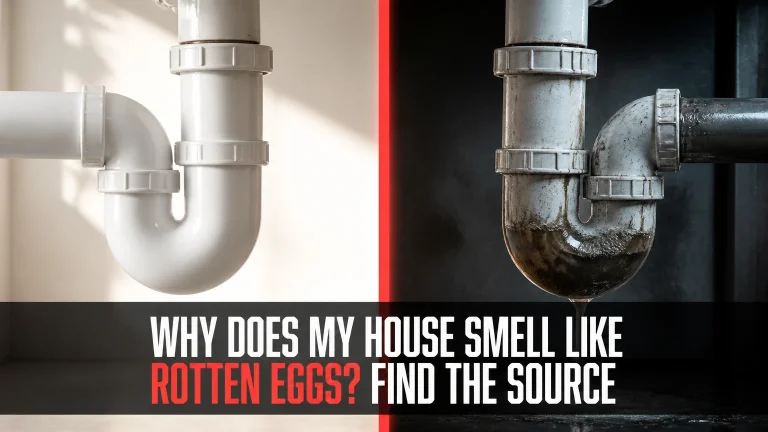
| Sour drain-like odor | Dry trap, drain biofilm, sewage issue | Floor and sink drains | Smell resembles sulfur or sewage |
| Earthy odor after rain | Leak, seepage, wet crawlspace | Window wells, foundation | Delayed increase after rainfall |
How does summer heat create a musty smell?
Summer heat raises the amount of water vapor entering a home, while air conditioning creates cool surfaces that can collect condensation. The important variable is dew point, not outdoor temperature by itself: air becomes increasingly prone to condensation as its temperature falls without losing its moisture.
For example, 80°F outdoor air at 70% relative humidity has a dew point near 69°F. If that air reaches a basement wall, supply duct, pipe, or poorly insulated surface near or below that temperature, condensation can form. Repeated wetting raises the moisture content of drywall, wood, carpet, and insulation.
Air conditioning normally removes water as indoor air passes over a cold evaporator coil. A system that cools the thermostat area quickly may stop before it removes sufficient moisture. Oversizing, low airflow, a dirty filter, refrigerant problems, or a malfunctioning condensate drain can all leave the home cool but damp.
What humidity level causes summer mustiness?
Indoor relative humidity should usually remain between 30% and 50%, with 60% treated as an upper control limit rather than a precise mold-growth deadline. Mold risk depends on surface temperature, material, dust, duration, and water availability, so a brief 61% reading does not prove growth, while a persistently damp wall can support growth at a lower room-average reading.
| Indoor reading | Interpretation | Recommended response | Review period |
|---|---|---|---|
| 30%-50% RH | Preferred summer range | Maintain ventilation and cooling | Check weekly |
| 51%-59% RH | Watch range | Inspect bathrooms, closets, and foundation | Log for 24 hours |
| 60%-69% RH | Moisture-control concern | Run dehumidification and find source | Investigate immediately |
| 70%+ RH | High-risk condition | Check leaks, HVAC, basement, and crawlspace | Arrange prompt repair |
| Condensation present | Surface-specific failure | Dry surface and correct temperature or airflow | Same day |
| RH fluctuates 20%+ daily | Possible HVAC or infiltration issue | Compare indoor and outdoor readings | Log for 3-7 days |
The 30%-50% target comes from EPA guidance and common indoor-air-quality practice. No universal timer says mold begins exactly after 24 or 48 hours at one humidity percentage; porous materials and liquid water can change the outcome much faster.
Where should you look for the odor source?
The odor location usually identifies the moisture microenvironment. Whole-house smells point toward air distribution, a lower level, or elevated humidity, while a smell confined to one room often indicates a localized material or leak.
Begin with a clean-air comparison. Close interior doors for several hours, then check the strongest room, the HVAC return, supply vents, closets, carpet edges, and the back of furniture against exterior walls. Smell should guide inspection, not replace moisture measurement.
How can you test the house in 24 hours?
Place digital hygrometers in the main living area, the mustiest room, the basement or crawlspace access area, and near the HVAC return. Record temperature and RH at morning, afternoon, evening, and after the air conditioner runs for at least 30 minutes.
| Inspection area | Measure or inspect | Warning result | Next action |
|---|---|---|---|
| Main living area | RH and temperature | 60%+ RH for repeated readings | Add dehumidification and inspect HVAC |
| Basement | RH, wall surface, floor edges | 60%+ RH or damp masonry | Check drainage and use a basement dehumidifier |
| HVAC air handler | Coil, pan, filter, drain | Standing water or biological residue | Shut off power before service and call technician |
| Closet | Clothing, shoes, wall, carpet | Damp fabric or wall staining | Remove contents and dry materials |
| Exterior perimeter | Gutters, grading, windows | Water against foundation | Extend discharge and repair drainage |
| Bathroom | Fan operation and ceiling | Condensation or spotting | Improve exhaust and inspect attic or roof |
A typical consumer hygrometer costs $10-$30 and may vary by several percentage points. Use the trend across multiple locations rather than treating one inexpensive instrument as laboratory equipment.
Could the air conditioner be causing the smell?
An air conditioner can cause or distribute a musty odor when its evaporator coil, condensate pan, filter, or duct insulation stays damp. Short cycling is a common contributor because a large system reaches the thermostat setting quickly, leaving too little compressor runtime for effective latent moisture removal.
Set the thermostat fan to AUTO, not ON, unless an HVAC professional has given a specific reason to circulate continuously. When the compressor stops, a continuously running blower can evaporate residual coil moisture back into the home. Check that the filter is correctly sized and replaced according to its loading condition, often every 1-3 months in ordinary households.
Do not pour bleach into an air-conditioning drain line or spray unapproved chemicals into ductwork. A technician should inspect the evaporator coil, pan, blower compartment, condensate trap, drain slope, refrigerant performance, and system sizing.
| HVAC symptom | Likely fault | Homeowner check | Professional service |
|---|---|---|---|
| Odor only when cooling starts | Wet coil or pan residue | Replace filter and inspect accessible pan | Coil and pan cleaning |
| Cooling is fast, air feels clammy | Oversizing or short cycling | Count starts per hour | Load calculation and controls |
| Water near indoor unit | Blocked condensate drain | Check exterior drain outlet | Drain clearing and trap repair |
| Weak airflow at vents | Dirty filter, coil, or duct restriction | Inspect filter | Static-pressure and airflow test |
| Odor from every vent | Return-side contamination or damp duct | Check return grille | Air-handler and duct inspection |
| Fan spreads smell after cooling | Fan set to ON | Change to AUTO | Control and drainage diagnosis |
The common practitioner rule is simple: a clean filter cannot compensate for a blocked drain, and duct cleaning cannot correct a wet building envelope. Diagnose moisture before purchasing an odor treatment.
Are basements and crawlspaces the hidden cause?
Basements and crawlspaces frequently cause summer mustiness because warm, humid air contacts cooler foundation surfaces and framing. Opening basement windows or crawlspace vents during humid weather can increase condensation instead of drying the space.
A basement may transfer odor upstairs through stairwells, utility penetrations, return-air leaks, and pressure differences. Crawlspaces can affect the living area through floor gaps, plumbing penetrations, recessed lights, and duct leakage. Exposed soil, standing water, damp joists, and unsealed foundation walls each require a different correction.
Inspect gutters, downspouts, window wells, sump systems, and the ground slope around the house. Downspouts should discharge far enough from the foundation to prevent local pooling; a six-foot extension is a practical target where site conditions allow, although local grading and underground drainage may require a different design.
Should you ventilate a crawlspace in summer?
Usually no, not when outdoor dew point exceeds crawlspace surface temperature. Humid air entering a cool crawlspace can condense on foundation walls, ducts, and framing, so moisture control commonly relies on drainage, a ground vapor retarder, air sealing, and mechanical dehumidification rather than open vents.
Crawlspace encapsulation is not a plastic-sheet shortcut. A durable project may require removal of standing water, repair of plumbing leaks, sealed seams, wall detailing, conditioned-air or dehumidifier design, and termite-access considerations. Local building codes and pest-control requirements should guide the work.
What else makes one room smell musty?
Closed rooms accumulate moisture from people, showers, plants, wet laundry, and exterior air leakage, especially when supply and return airflow are weak. Furniture pressed against a cool exterior wall can trap air and create a small damp zone that remains invisible from the room.
Remove clothing, shoes, books, and boxes from the closet before evaluating the wall. Washable fabrics can often be laundered and fully dried, but moldy carpet padding, insulation, mattresses, and upholstered furniture may require professional assessment or disposal because odor can persist inside the material.
Check window condensation, caulk joints, roof penetrations above the room, plumbing on the opposite side of the wall, and the attic insulation near the ceiling. A moisture meter can help compare suspicious areas, but readings vary by material and should support, not replace, visual and building investigation.
| Material | Safe initial response | Replacement concern | Typical handling time |
|---|---|---|---|
| Cotton clothing | Wash and dry completely | Odor remains after two wash cycles | 1-2 days |
| Leather shoes | Clean exterior and dry slowly | Persistent interior odor or visible growth | 2-4 days |
| Carpet surface | Extract and dry rapidly | Wet pad or repeated odor | 24-48 hours |
| Drywall | Dry only if clean and undamaged | Swelling, staining, or hidden growth | 1-3 days |
| Upholstered furniture | HEPA vacuum and professional cleaning | Saturated foam or recurring odor | 2-7 days |
| Books and paper | Isolate and dry in low humidity | Warping, spotting, or extensive growth | 2-5 days |
Which moisture-control option should you choose?
A portable dehumidifier is usually the practical first purchase for one damp room, while a ducted whole-house unit suits widespread humidity that normal air conditioning cannot control. Basement drainage and crawlspace correction take priority when those areas continuously supply moisture.
Capacity labels are not directly comparable across all conditions. A “50-pint” rating depends on the test standard and operating temperature; a cold basement may extract substantially less water than a warm room. Choose a model with continuous drainage, a hose route that stays downhill, and a humidistat rather than relying on a fixed timer.
| Option | Typical U.S. cost | Best coverage | Main specification | Main limitation |
|---|---|---|---|---|
| Portable dehumidifier | $180-$450 | One room, 300-1,500 sq. ft. | 30-50 pint class | Noise, heat, drainage |
| Basement dehumidifier | $250-$800 | Cool lower levels | Low-temperature operation | Does not repair leaks |
| Whole-house ducted unit | $1,500-$3,500 installed | Multiple zones | Dedicated humidistat and drain | Installation cost |
| Crawlspace encapsulation | $3,000-$15,000 typical | Foundation moisture | Sealed vapor retarder and air sealing | Drainage may remain necessary |
| HVAC service | $150-$600 | Coil, drain, airflow faults | Coil and condensate inspection | Does not fix exterior water |
| Professional remediation | $1,000-$6,000+ | Confirmed contamination | Containment and material removal | Area and damage determine price |
These are typical U.S. ranges, not fixed quotes. Regional labor, access, contamination area, drainage complexity, equipment brand, and code requirements can change the total substantially.
Is duct cleaning the best solution?
Duct cleaning is useful when inspection finds substantial debris, pest contamination, or mold growth inside the duct system, but it is not the default fix for a musty house. The air handler, coil, drain pan, return cavity, and wet insulation often deserve attention first.
Do not authorize a contractor solely because a vent smells. Ask for photographs, moisture readings, the exact contaminated component, and a written scope that explains whether insulation will be removed or replaced. The National Air Duct Cleaners Association recommends source-specific evaluation rather than treating every odor as a duct-cleaning problem.
How do you remove the smell safely?
Remove the moisture source first, dry materials promptly, then clean nonporous surfaces with detergent and water. Odor absorbers, fragrances, ozone generators, and fogging products cannot substitute for drying, and ozone can irritate lungs while damaging rubber, dyes, and some finishes.
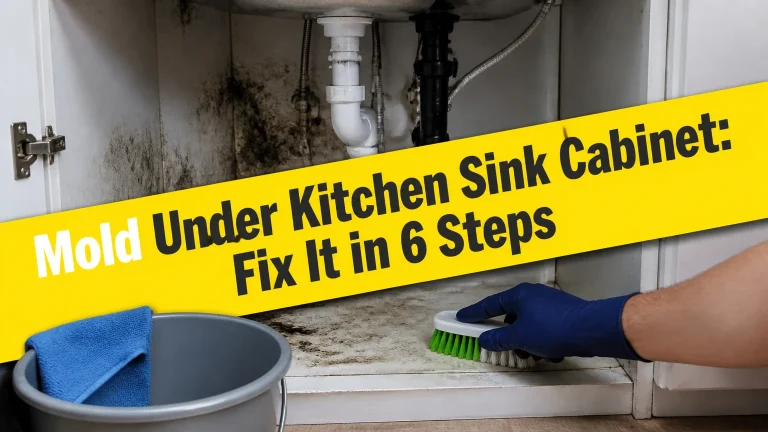
For a small area on a hard, nonporous surface, wear gloves and eye protection, ventilate appropriately, clean with detergent, and dry completely. Never mix bleach with ammonia, acids, or other cleaners. Porous drywall, carpet pad, insulation, and ceiling tile may need removal when they are swollen, repeatedly wet, or visibly contaminated.
The EPA generally recommends professional help when mold covers more than about 10 square feet, when sewage or floodwater is involved, or when occupants have significant respiratory sensitivity. People with asthma, chronic lung disease, immune suppression, or severe mold allergy should avoid disturbing contaminated materials and consult a medical professional about symptoms.
What common fixes fail?
Several popular responses reduce the smell briefly while leaving the moisture mechanism intact. Failure usually occurs because the homeowner treats the air instead of the wet material, drainage defect, HVAC fault, or humidity load.
- Using fragrance or candles: Masks odor and adds airborne chemicals without drying the source.
- Running the AC fan continuously: Can redistribute moisture from a wet evaporator coil after compressor shutdown.
- Opening basement windows: Often imports humid air onto cool masonry during summer.
- Buying an oversized AC: Improves rapid cooling but may reduce dehumidification through short cycling.
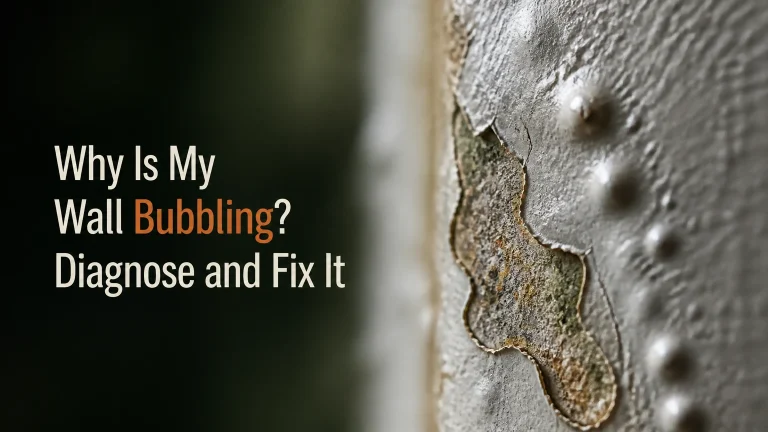
- Cleaning only visible mold: Leaves hidden growth behind furniture, beneath flooring, or inside damp wall cavities.
- Relying on a moisture absorber tub: Helps a small sealed cabinet but cannot control a basement or occupied room.
- Applying bleach to drywall: Does not reliably penetrate porous materials and can damage surfaces.
- Sealing a crawlspace before drainage repair: Traps or redirects water problems instead of solving them.
A useful expert rule is to separate air treatment, source control, and material remediation. Air treatment includes filtration and dehumidification; source control includes leak repair and drainage; remediation includes cleaning or removal. Only the second category stops new moisture.
How much does professional correction cost?
Typical U.S. costs range from about $150 for basic HVAC diagnosis to more than $15,000 for extensive crawlspace or water-damage work. The price depends less on odor intensity than on the moisture source, affected area, material replacement, access, and whether structural drying is required.
| Service or project | Typical cost range | Typical duration | Cost driver |
|---|---|---|---|
| HVAC diagnostic visit | $100-$250 | 1-2 hours | Region and after-hours service |
| Condensate drain clearing | $100-$350 | 1-3 hours | Access and blockage location |
| Coil or pan cleaning | $200-$700 | 2-5 hours | Coil access and contamination |
| Basement dehumidifier setup | $300-$1,200 | 2-6 hours | Drain route and electrical work |
| Mold assessment | $300-$1,000 | 2-5 hours | Sampling and report scope |
| Small-area remediation | $800-$3,000 | 1-4 days | Containment and materials |
| Crawlspace encapsulation | $3,000-$15,000 | 2-7 days | Size, drainage, and repairs |
| Flood or sewage remediation | $2,000-$20,000+ | 3-14 days | Water category and rebuilding |
Independent assessment is worthwhile when the smell persists after humidity falls below 50%, when walls or floors are damaged, or when a contractor recommends expensive work without moisture measurements. Mold sampling is not always necessary; locating and correcting moisture usually provides more actionable information.
What should you do today?
Use the following sequence to narrow the source before buying equipment or hiring a cleaner:
- Measure humidity. Record RH in four locations for one day. Identify any room repeatedly above 60%.
- Set the HVAC fan to AUTO. Replace a loaded filter with the correct size and confirm that the outdoor condensate outlet produces water during cooling.
- Inspect for standing water. Check the air-handler pan, floor drains, sump pit, water heater, washing machine, and refrigerator line.
- Trace the strongest odor. Compare vents, closets, carpets, furniture backs, basement stairs, and crawlspace access points.
- Check outside drainage. Clear gutters, extend downspouts, and look for foundation pooling after rain.
- Control humidity. Use a drained dehumidifier and target 40%-50% RH, while avoiding over-drying below 30%.
- Dry and clean materials. Launder fabrics, extract wet carpet, clean hard surfaces, and isolate porous items that retain odor.
- Escalate when needed. Arrange qualified HVAC, waterproofing, or remediation evaluation for recurring water, hidden damage, sewage, or extensive mold.
You will know the correction is working when RH remains stable, condensation stops, materials dry, and the odor declines over several days rather than disappearing only while fragrance is present.
Frequently Asked Questions
Why does my house smell musty after rain but not during dry weather?
Rain-related mustiness usually indicates water entry, foundation seepage, roof leakage, saturated soil near the structure, or a crawlspace that becomes humid after storms. Inspect window wells, gutters, downspouts, attic penetrations, basement walls, and plumbing chases. A delayed odor increase can occur because wet materials release mVOCs after they warm.
Can a house smell musty without visible mold?
Yes. Mold or bacterial growth may be behind drywall, beneath carpet, inside wall insulation, under furniture, in an air handler, or within a crawlspace. Damp textiles and wood can also hold odor without visible colonies. Use humidity and moisture measurements to guide inspection, rather than assuming that a clean-looking room is dry.
Why does the smell disappear when the AC runs?
Cooling may temporarily reduce relative humidity and dilute odor through air movement, but the AC can also spread odor from a wet coil, pan, or return cavity. If the smell returns after the compressor stops, inspect drainage, fan mode, coil cleanliness, and the air handler. A dehumidifier may be needed when cooling capacity exceeds moisture-removal needs.
Will baking soda remove a musty smell from carpet?
Baking soda may reduce surface odor briefly, but it cannot dry carpet padding or remove contamination beneath the visible fibers. Extract the carpet, dry the pad and subfloor within 24-48 hours, and investigate the moisture source. Replace padding that remains wet, swollen, stained, or odorous after professional drying.
Should renters report a musty smell to the landlord?
Yes. Report the odor in writing, include dates and affected rooms, photograph visible staining, and provide RH readings if available. Do not remove drywall or use ozone equipment without permission. Landlords, property managers, or local housing agencies can coordinate leak repair, HVAC service, and professional remediation when the cause involves the building.
Can an air purifier fix a musty house?
A HEPA air purifier can reduce airborne particles, and activated carbon can adsorb some odors, but neither removes water or repairs mold-contaminated materials. Use filtration as a supplementary measure after moisture control. Select a unit sized for the room, keep doors and windows configured as intended, and replace filters on schedule.
The Bottom Line
The answer to why does my house smell musty in summer is usually elevated moisture interacting with cool surfaces, porous materials, hidden water, or damp HVAC components. Measure indoor humidity, inspect the air conditioner and lower levels, trace the strongest odor, and correct the water source before cleaning. Keep summer RH near 30%-50%, escalate persistent or extensive contamination, and treat odor reduction as evidence of drying rather than proof that the problem is gone.