Why Does My Room Smell Like Fish? Find the Source
A room can smell like fish without containing fish because heated electrical plastic, sewer gas, HVAC contamination, decomposing pests, mold, cooking residue, or contaminated water can release odor-producing chemicals. Treat a sudden odor near an outlet, switch, appliance, light, or vent as a possible electrical fault first, because overheating can precede visible smoke or fire.
Key Facts at a Glance
- A fishy or fish-like smell near a warm outlet, switch, cord, or light fixture requires immediate electrical isolation and professional inspection.
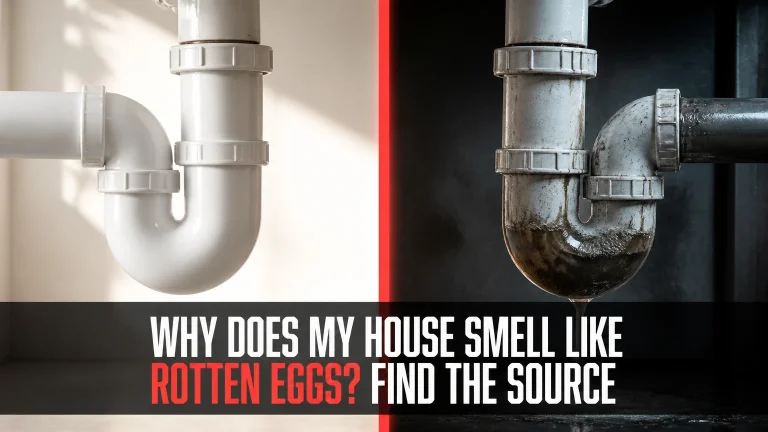
- A dry P-trap can let sewer odors enter a room, especially near an unused bathroom, floor drain, laundry drain, or utility sink.
- HVAC systems can transport an odor from another room, a condensate pan, a dirty filter, a dead animal, or an overheating motor.
- A fishy odor alone does not identify the source; location, timing, heat, noise, and airflow provide stronger diagnostic evidence.
- Air fresheners, candles, ozone machines, and blind use of bleach can hide hazards or create additional respiratory risks.
- Typical USA diagnostic costs range from $100-$350 for an electrician or plumber, with emergency and after-hours rates often higher.
Why Does My Room Smell Like Fish?
The most urgent explanation is an overheating electrical component, but plumbing, HVAC equipment, moisture, pests, food residue, and odor transfer from another space are also plausible. Electrical odor usually concentrates around a device or wiring point, while plumbing odor gathers near drains and HVAC odor follows registers or return grilles.
Human descriptions are imperfect. Some people describe overheated plastic as fishy, urine-like, ammonia-like, or metallic. Others use “fishy” for sulfurous drain gas or decomposing organic material, so the adjective must be paired with physical clues before selecting a repair.
| Likely source | Strongest clue | Typical timing | Immediate concern |
|---|---|---|---|
| Electrical component | Warm plate, buzzing, discoloration | During appliance use or randomly | Fire and shock hazard |
| Dry P-trap | Odor beside drain or floor opening | After drain sits unused | Sewer gas entry |
| HVAC equipment | Odor from supply register | When fan or heat starts | Contamination or motor fault |
| Dead rodent or insect nest | Localized wall, ceiling, or vent odor | Worsens over several days | Decomposition and pests |
| Cooking residue | Near kitchen, trash, fabric, or carpet | After frying or seafood cooking | Usually low fire risk, unless grease remains |
| Mold or moisture | Damp wall, carpet, closet, or baseboard | Stronger in humid weather | Water damage and irritation |
How Can an Electrical Fault Create a Fishy Smell?
An electrical fault can create a fishy smell when a loose connection, overloaded circuit, failing switch, power strip, LED driver, or appliance produces heat that softens or decomposes nearby plastic insulation. Electrical resistance heating can remain below the temperature needed for open flames while still releasing an acrid odor.
Loose terminal screws increase resistance at the connection. The connection then heats under load, which can discolor the receptacle, soften its body, and damage the wire insulation. Arcing can produce buzzing, crackling, or black marks. A smell that disappears after an appliance shuts off remains a warning because the damaged connection may heat again.
The U.S. Consumer Product Safety Commission identifies hot or unusually warm outlets, switches, and cords as warning signs requiring attention. The Electrical Safety Foundation International also lists flickering lights, buzzing, discoloration, and burning odors among signs of electrical trouble. These organizations do not establish that every fishy odor is electrical, so location and heat still matter.
Where should you inspect first?
Inspect from a distance first, beginning with the nearest outlet, switch, appliance cord, power strip, light fixture, and HVAC control. Do not remove a cover plate, insert a tester into a damaged receptacle, or touch a smoking device.
| Location | Warning evidence | Safe action | Professional needed |
|---|---|---|---|
| Wall outlet | Heat, brown marks, odor at faceplate | Stop using it and switch off the circuit if safe | Licensed electrician |
| Light switch | Warmth, crackling, flicker | Turn the light off and avoid the switch | Licensed electrician |
| Power strip | Melted plastic, overloaded plugs | Unplug only if cool and accessible | Electrician if damaged |
| Space heater | Hot plug, extension cord, scorched wall | Leave the room and cut power from a safe location | Electrician and appliance replacement |
| Recessed light | Odor above ceiling, flicker, heat | Turn off the fixture | Electrician |
| Breaker panel | Odor, heat, buzzing, repeated trips | Do not open the panel; leave if smoke appears | Electrician or fire department |
When Is a Fishy Smell an Electrical Emergency?
A fishy smell becomes an electrical emergency when it occurs with smoke, visible sparking, heat, buzzing, popping, melted plastic, a tripped breaker, flickering lights, or an odor that strengthens while a device operates. Leave the room and call 911 from outside if smoke, flames, or active arcing is present.
Use this response sequence:
- Stop using suspected equipment. Do not turn a questionable appliance back on to reproduce the smell.
- Cut power only if the breaker is clearly accessible and the panel shows no smoke, heat, or sparking. Keep your hands dry and stand to the side.
- Do not spray water on electrical equipment. Water can conduct electricity and spread the hazard.
- Leave the building if smoke, fire, or intense burning odor develops. Close the door behind you if doing so takes no extra risk.
- Call a licensed electrician after the immediate hazard is controlled. A damaged receptacle may require wire inspection, not only a faceplate replacement.
A circuit breaker may trip after damage has already occurred. Resetting it repeatedly can re-energize a failing connection. That is a common homeowner mistake.
Could a Dry Drain or Sewer Problem Cause the Odor?
A dry P-trap can allow sewer gas into a room, particularly beside an unused sink, shower, floor drain, laundry standpipe, or utility basin. Sewer gas often smells like rotten eggs because of hydrogen sulfide, but mixed household waste, ammonia, stagnant water, and microbial residue can produce fish-like or sour odors.
Pour approximately 1-2 cups of water into an infrequently used drain. Run the faucet for 30-60 seconds when the drain connects to a trap, then wait 15-30 minutes to see whether the odor declines. For a floor drain used only occasionally, add water followed by 1-2 tablespoons of mineral oil to slow evaporation, if local plumbing guidance permits it.
A recurring smell indicates more than a dry trap. A plumber may need to inspect the vent stack, drain connections, toilet wax ring, cleanout, trap seal, or concealed leak.
| Plumbing clue | Probable fault | Homeowner action | Escalation point |
|---|---|---|---|
| Odor improves after adding water | Dry P-trap | Refill weekly or monthly as needed | Plumber if it dries repeatedly |
| Smell near toilet base | Failed wax ring or seal | Stop using if water leaks | Plumber promptly |
| Odor from several drains | Venting or main drain issue | Limit water use | Emergency plumber for backup |
| Gurgling after flushing | Blocked vent or drain | Avoid chemical drain cleaner | Plumber inspection |
| Floor drain odor after rain | Trap seal loss or sewer surcharge | Add water temporarily | Plumber if repeated |
| Odor with nausea or dizziness | Concentrated sewer gas or another hazard | Leave and ventilate from safety | Emergency services or poison control |
Never mix bleach with ammonia, acids, acidic drain cleaners, or unknown drain chemicals. Chloramine or chlorine gases can form, and household labels do not always reveal what residue remains inside a pipe.
Why Does the HVAC System Spread the Smell?
An HVAC system spreads a room odor when the return grille draws air from a contaminated area or when the air handler contains a dirty filter, wet insulation, condensate residue, dead pest, or overheating electrical motor. The smell may appear only when the blower, furnace, heat pump, or air conditioner runs.
Check whether the odor comes from one supply register or the central return. A single register suggests a nearby branch duct, insulation, pest, or spill. Multiple registers suggest the air handler, return plenum, filter, or another connected room.
Turn the system off if the odor resembles burning plastic or electrical scorching. Replace a visibly dirty filter only if the filter compartment is cool and accessible; do not open the air handler or handle wet insulation without appropriate protection. The U.S. Environmental Protection Agency links indoor air quality problems to pollutant sources, ventilation, and HVAC operation, but an odor cannot determine exposure risk by itself.
What Biological Sources Should You Check?
Dead rodents, birds, insects, wet organic debris, mold, and bacteria can produce fishy, sour, sweet, musty, or ammonia-like odors. A biological source usually becomes more localized and stronger over days, while an electrical odor often tracks load, heat, or equipment operation.
Look behind removable furniture, beneath carpet edges, around plumbing penetrations, inside accessible return grilles, and near attic or crawl-space openings. Do not cut into drywall or insulation solely to chase an odor. A pest professional can locate carcasses or nests, while a remediation contractor can assess concealed moisture.
The Centers for Disease Control and Prevention states, “Exposure to damp and moldy environments may cause a variety of health effects, or none at all.” That wording matters: odor does not prove toxic mold, and the presence of a named mold species does not automatically establish a specific illness.
| Biological clue | Likely source | Verification method | Typical response |
|---|---|---|---|
| Musty odor plus damp surface | Mold or bacterial growth | Moisture meter and visual inspection | Correct moisture, then clean or remediate |
| Strong odor in wall cavity | Dead rodent or nest | Pest inspection or borescope | Remove source and seal entry |
| Odor near return vent | Animal, debris, or wet insulation | HVAC inspection | Clean or replace contaminated material |
| Odor under carpet | Spill, urine, or damp pad | Lift edge carefully | Extract, dry, or replace pad |
| Odor near trash or fabrics | Food residue or grease | Remove source and wash surface | Enzyme cleaner or detergent |
Do not disturb extensive mold growth, animal feces, or contaminated insulation without professional advice. People with asthma, severe allergies, or immune suppression should avoid cleanup exposure.
How Can You Find the Source in Ten Minutes?
You can narrow the source in about ten minutes by mapping the strongest odor, checking airflow, observing electrical warning signs from a safe distance, and testing only low-risk plumbing conditions. The determining factor is whether the smell follows heat, water, airflow, or a fixed material.
Step 1: Map the strongest location
Stand at the doorway, then sample the room perimeter without touching equipment. Record whether the odor is strongest at an outlet, switch, appliance, register, return grille, drain, wall, closet, carpet, or ceiling.
Step 2: Check electrical warning signs
Look for heat, discoloration, flicker, buzzing, crackling, melted plastic, or a tripped breaker. If any appears, stop troubleshooting, leave the circuit off if safely possible, and call an electrician.
Step 3: Compare fan on and fan off
If there are no electrical warning signs, turn the HVAC system off and observe whether the odor fades over 15-30 minutes. Do not run the system merely to intensify a suspected burning odor.
Step 4: Check drains
Add water to an unused drain and close the bathroom or utility-room door. A noticeable reduction within 15-60 minutes supports a trap or drain pathway, but it does not rule out a vent or leak problem.
Step 5: Check removable sources
Remove trash, food containers, damp laundry, pet bedding, and visibly contaminated filters. Inspect accessible surfaces without opening walls, ceilings, breaker panels, or sealed HVAC equipment.
Step 6: Document the pattern
Write down the time, weather, appliances operating, HVAC mode, drain use, odor location, and symptoms. Intermittent patterns often identify a device cycling on, a neighbor’s exhaust, or airflow from another unit.
| Observation | Strongest interpretation | Next call |
|---|---|---|
| Odor plus warm outlet | Electrical overheating | Electrician today |
| Odor only when HVAC runs | Air handler, duct, or airflow source | HVAC contractor, electrician if scorched |
| Odor beside unused drain | Dry trap or drain residue | Plumber if water does not solve it |
| Odor growing in one wall | Pest, moisture, or concealed material | Pest specialist or remediator |
| Odor in multiple apartments | Shared plumbing or ventilation | Landlord or property manager |
| Odor with burning and smoke | Active fire hazard | 911 from outside |
What Do Intermittent and Seasonal Odors Mean?
An intermittent odor often follows a changing trigger rather than a disappearing problem. Electrical components may smell when a refrigerator, heater, computer power supply, or lighting circuit loads the connection; HVAC odors may occur only during heating startup, cooling, or defrost cycles.
Seasonal changes can dry plumbing traps, increase humidity, activate air conditioning, or drive pests into wall cavities. Odors from a neighboring unit can also enter through receptacles, pipe chases, shared returns, or bathroom exhaust pathways, especially in apartments.
A useful rule is to correlate odor with one variable at a time. Record whether the smell appears after a device starts, a drain runs, the fan turns on, rain occurs, or a neighboring unit cooks. Do not repeatedly recreate a suspected electrical fault.
How Much Does Diagnosis and Repair Cost?
Typical USA costs range from $100-$350 for a standard electrician or plumber diagnostic visit, while emergency, weekend, rural, and major-metro rates can exceed that range. Repair cost depends on whether the source is a single receptacle, concealed wiring, a drain seal, HVAC equipment, or structural moisture.
These are planning ranges, not guarantees. Licensed contractors should provide a written scope before non-emergency work.
| Service or repair | Typical USA price | Typical duration | Main price variable |
|---|---|---|---|
| Electrical diagnostic | $100-$350 | 1-3 hours | Emergency timing and access |
| Receptacle or switch replacement | $150-$400 | 1-2 hours | Wire damage behind box |
| Circuit or junction repair | $300-$1,500 | 2-8 hours | Wall access and permit needs |
| Plumbing odor diagnostic | $100-$300 | 1-2 hours | Camera or roof access |
| Trap, seal, or drain repair | $150-$600 | 1-4 hours | Concealed leak location |
| HVAC odor inspection | $100-$300 | 1-2 hours | Air-handler access |
| Pest removal and entry sealing | $150-$800 | 1-4 hours | Animal type and cavity access |
| Mold or moisture assessment | $250-$800 | 2-6 hours | Sample count and water damage |
A $15-$50 replacement part does not make electrical repair a safe DIY project. The labor risk is in identifying damaged conductors, overheated boxes, circuit capacity, and hidden arcing.
Which Fixes Make the Problem Worse?
Masking a fishy odor can delay action on a fire, sewer, moisture, or pest problem. Candles and incense add an ignition source, ozone generators can irritate lungs and damage materials, and bleach can react with drain chemicals.
Avoid these mistakes:
- Resetting a tripped breaker repeatedly: leave the circuit off until inspected.
- Touching a hot faceplate: use distance and the breaker instead of testing temperature by hand.
- Spraying cleaner into an outlet or register: liquids can damage equipment and create shock risk.
- Pouring bleach into an unidentified drain: chemical residues may react and create toxic gas.
- Opening walls immediately: concealed wiring, asbestos-containing materials, or contaminated insulation may be present.
- Using an air freshener as a test: fragrance changes your perception without removing the source.
One practitioner rule is reliable: if odor intensity changes when electrical load changes, treat the pattern as electrical until a qualified person excludes it. A disappearing odor is not a safety clearance.
What Should Renters, Homeowners, and Landlords Do?
Renters should report the odor in writing, include photographs of discoloration or damage, and request an electrician, plumber, or HVAC inspection based on the evidence. Renters should not remove electrical covers, open walls, or make permanent plumbing repairs.
Homeowners can safely refill a dry trap, remove food waste, replace an accessible HVAC filter, and clean a washable surface. Homeowners should leave wiring, breaker panels, concealed ducts, gas pathways, and damaged receptacles to qualified professionals.
Landlords and property managers should treat a fishy odor near electrical equipment as a same-day safety report. In multifamily buildings, inspect adjacent units, shared ventilation, plumbing stacks, and common electrical pathways rather than assuming the reported room contains the source.
| Occupant situation | First action | Documentation | Escalation |
|---|---|---|---|
| Renter, no visible hazard | Notify landlord in writing | Date, location, timing, photos | Maintenance request |
| Renter, hot outlet or smoke | Leave area and call emergency services if needed | Report after reaching safety | Electrician through landlord |
| Homeowner, dry drain | Add 1-2 cups of water | Record whether odor changes | Plumber if recurring |
| Homeowner, scorched outlet | De-energize only if safe | Photograph from a distance | Licensed electrician |
| Property manager, multiple units | Check shared systems | Unit map and odor timeline | Electrician, plumber, or HVAC firm |
When Should You Call an Electrician, Plumber, or Pest Specialist?
Call an electrician for warmth, buzzing, flickering, discoloration, melted plastic, smoke, sparks, or an odor concentrated at an electrical component. Call a plumber for odor near drains, toilet bases, cleanouts, recurring dry traps, gurgling, backups, or multiple affected fixtures.
Call an HVAC contractor when the smell comes from registers or the air handler, particularly if it appears during fan operation or heating. Call a pest specialist for a localized wall, attic, ceiling, or vent odor that grows stronger over several days.
Seek urgent medical advice if exposure causes breathing difficulty, confusion, fainting, severe headache, or persistent vomiting. A fishy odor is not a reliable carbon monoxide warning because carbon monoxide is odorless; maintain working carbon monoxide alarms on every level and outside sleeping areas, as recommended by the U.S. Consumer Product Safety Commission.
Frequently Asked Questions
Can a fishy smell come from a power strip?
Yes. An overloaded, damaged, or internally failing power strip can heat its plastic housing and produce a fish-like or burning-plastic odor. Unplug the strip only if it is cool, dry, and easily accessible. Replace damaged strips rather than reusing them, and have an electrician inspect the receptacle if heat, discoloration, or repeated breaker trips occurred.
Why does my bedroom smell fishy only at night?
Night-only odor can result from a heater, charger, computer, aquarium pump, or lighting circuit operating for longer periods, but airflow changes and neighboring-unit activity can also matter. Record which devices run after dark, then stop using any device associated with heat, noise, discoloration, or odor until inspected.
Can tap water make a room smell like fish?
Yes. Water containing organic compounds, algae byproducts, sulfur compounds, or certain treatment chemicals can smell fishy, especially when heated. Compare cold and hot water in a clean glass outdoors, and check whether the odor is present at multiple fixtures. A building manager or water utility can investigate persistent supply-water odors.
Is fishy-smelling mold toxic?
Fishy-smelling mold is not a reliable indicator of a particular mold species or toxicity. Mold and damp materials can irritate some people, while others have no symptoms. Correct the moisture source, avoid disturbing extensive growth, and use a qualified remediator when contamination is widespread or occupants have respiratory vulnerability.
Should I leave my house because of a fishy smell?
Leave immediately if the odor accompanies smoke, sparks, hot electrical equipment, severe burning plastic smell, or breathing symptoms. If the odor is mild and clearly comes from a dry drain or food waste, ventilate safely and investigate low-risk sources. Do not remain near a suspected electrical fault to monitor it.
The Bottom Line
The answer to why does my room smell like fish is usually found by tracing four variables: heat, water, airflow, and decomposition. A warm or noisy outlet, switch, appliance, light, or breaker makes electrical overheating the priority; a drain points toward a trap or sewer pathway; a register points toward HVAC or odor migration; and a localized wall or carpet odor suggests moisture, food, or pests.
Do not mask the smell or repeatedly reset power. Isolate the area safely, document the pattern, and choose an electrician, plumber, HVAC contractor, pest specialist, or emergency responder based on the strongest physical clue.