Why Does My House Smell Musty? Find Hidden Moisture
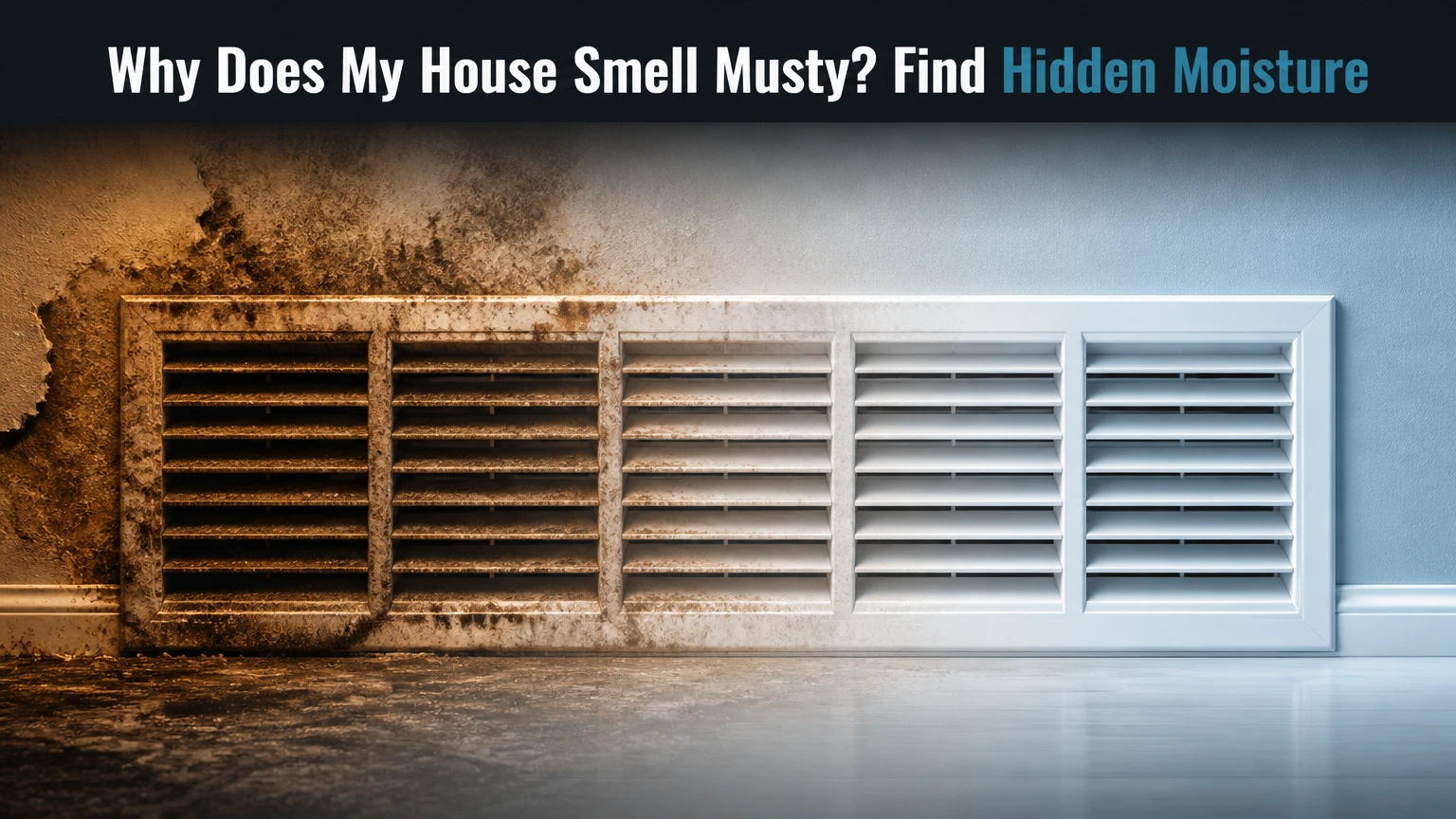
A musty house smell usually comes from moisture that supports mold, mildew, or bacterial growth, which can release microbial volatile organic compounds into indoor air. The odor can also come from damp carpets, stagnant HVAC condensate, wet insulation, stored fabrics, or crawlspace materials, so the smell identifies a moisture or contamination problem rather than proving mold is present.
Key Facts at a Glance
The EPA recommends keeping indoor relative humidity below 60%, ideally between 30% and 50%, to limit condensation and mold growth.
A musty odor is a warning sign, but odor alone cannot locate contamination or confirm that mold is present.
The strongest smell often marks the air pathway, not the original moisture source.
Porous materials such as drywall, carpet padding, insulation, and upholstered furniture may require removal after prolonged wetting.
Cleaning mold without repairing the leak, condensation, or humidity problem usually leads to recurring odor.
A professional assessment is appropriate when contamination covers more than about 10 square feet, involves HVAC systems, follows flooding, or affects sensitive occupants.
Why Does My House Smell Musty?
Mold, mildew, bacteria, and damp porous materials create most musty odors because moisture changes the indoor environment and supports biological activity. Microbial volatile organic compounds, or mVOCs, are airborne chemicals produced by microorganisms; some have earthy, stale, or mushroom-like odors that people describe as musty.
The odor is a useful screening clue, not a laboratory diagnosis. A house may smell musty before visible colonies appear, especially when growth is behind baseboards, beneath flooring, inside wall cavities, under insulation, or around an HVAC evaporator coil. Conversely, old odor can remain after growth has been removed because fabrics, wood, dust, and drywall absorbed the compounds.
The EPA states, “The key to mold control is moisture control.” That principle matters more than the choice between vinegar, detergent, or a commercial antimicrobial product. If a roof leak, plumbing failure, humid crawlspace, or air-conditioning condensate problem remains active, surface cleaning treats the symptom while the building continues supplying moisture.
What does a musty smell actually tell you?
A musty smell tells you to investigate moisture, microbial growth, or damp materials in the air path. It does not tell you the contamination type, the size of the affected area, or whether the source is inside the room where the odor is strongest.
Odor intensity is also an unreliable measure of risk. A small, concentrated source may smell strong, while a larger source behind a sealed wall may release less odor into the occupied space. People with asthma, allergies, chronic lung disease, or immune suppression may experience symptoms from damp indoor environments, although odor strength cannot predict an individual health response.
How Does Musty Odor Develop?
Musty odor develops when water or high humidity keeps a material damp long enough for microorganisms to grow or for fabrics and building materials to retain odor compounds. Mold spores are common indoors, but they need suitable moisture and a food source such as paper backing, dust, wood, wallpaper adhesive, carpet fibers, or organic debris.
Relative humidity is the amount of water vapor in air compared with the maximum that air can hold at a given temperature. Condensation occurs when a surface falls below the air’s dew point, which explains why exterior corners, window frames, supply vents, and cold water pipes can become wet even without a plumbing leak.
| Condition | Typical target or threshold | Likely house effect | Immediate check |
|---|---|---|---|
| Indoor relative humidity | 30%-50% | Lower condensation and mold potential | Hygrometer in occupied rooms |
| Elevated humidity | 51%-59% | Greater condensation risk during cool weather | Run ventilation or dehumidifier |
| High humidity | 60% or higher | Supports damp materials and recurring odor | Inspect basement, crawlspace, and bathrooms |
| Wet drywall or wood | Above surrounding baseline | Possible leak or condensation path | Compare with an unaffected area |
| Carpet padding after a leak | More than 24-48 hours wet | Odor, bacterial growth, and possible mold | Lift carpet edge and inspect pad |
A temperature change can create a hidden problem. Warm, humid summer air entering a cool basement may condense on foundation walls or pipes. In winter, indoor moisture can condense behind furniture placed tightly against an exterior wall, particularly where insulation or air sealing is poor.
Can a house smell musty without visible mold?
A house can smell musty without visible mold because contamination may be concealed, inaccessible, too small to see, or located in an HVAC or crawlspace system. Damp carpet padding, wet insulation, old flood materials, and mold behind wallpaper can release odor while room surfaces appear clean.
Do not open a wall solely because of a smell. First compare moisture readings, inspect accessible edges, look for staining or swelling, and identify whether airflow changes the odor. Destructive inspection becomes more reasonable when a moisture meter finds a persistent wet zone, a wall has a history of leakage, or odor returns after appropriate surface cleaning.
Where Is the Musty Smell Coming From?
The source is often found by combining location, timing, airflow, and moisture evidence rather than following odor intensity alone. Close doors for several hours, compare rooms, then check the strongest area after the HVAC system has been off and running.
| Strongest location | Common source | Supporting clue | First inspection |
|---|---|---|---|
| Basement | Foundation seepage, wet storage, carpet, sump failure | Damp concrete or efflorescence | Foundation perimeter and floor-wall joint |
| Crawlspace | Ground vapor, plumbing leak, wet insulation | Earthy odor through floor registers | Vapor barrier, standing water, insulation |
| Bathroom | Exhaust failure, shower leak, wet caulk, vanity plumbing | Odor after showers | Fan airflow, toilet base, shower enclosure |
| Closet | Damp clothing, exterior-wall condensation, carpet | Smell strongest behind stored items | Back wall, floor edge, and garments |
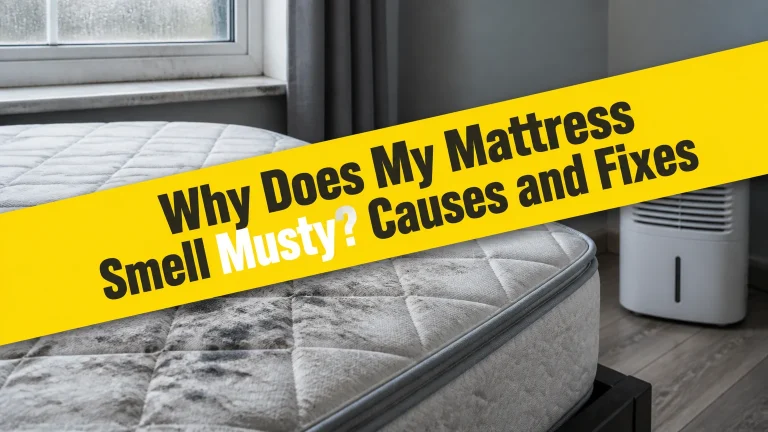
| Bedroom | Condensation, mattress, upholstered furniture, wall leak | Odor changes with furniture position | Exterior wall and furniture underside |
| HVAC vent | Wet coil, drain pan, duct insulation, dirty filter | Odor starts when cooling runs | Filter, condensate drain, accessible plenum |
| Kitchen or laundry | Appliance hose, drain, cabinet leak | Swelling beneath sink or washer | Supply lines, drain traps, cabinet floor |
The strongest odor can travel from a crawlspace through plumbing penetrations, electrical openings, recessed lights, or floor registers. A basement smell on the first floor therefore does not prove that the first floor contains mold.
Why does the smell get worse when the AC runs?
A musty smell that worsens when the air conditioner runs commonly points to a wet evaporator coil, condensate pan, drain line, filter, or duct component. Cooling equipment removes water from air, and trapped condensate can support odor-producing growth or bacteria when drainage is poor.
Turn the system off if water is near electrical components, then inspect the filter and the area around the indoor air handler. A homeowner can replace a correctly sized filter and confirm that the condensate drain is not overflowing, but coil cleaning, duct opening, refrigerant work, and internal treatment belong to a qualified HVAC technician.
| Odor timing | More likely source | Less likely source | Safe next action |
|---|---|---|---|
| Only when AC starts | Coil, pan, drain, supply duct | Roof leak | HVAC inspection |
| Only when heat starts | Dust, dead animal, overheated material | Wet evaporator coil | Stop use if burning odor appears |
| Constant in one room | Wall, carpet, closet, furniture | Whole-house humidity alone | Isolate and inspect materials |
| After rain | Roof, window, foundation, crawlspace | Dry interior textiles | Check stains and moisture readings |
| After showers | Exhaust, bathroom leak, damp textiles | Main sewer line | Test fan airflow and inspect enclosure |
| After closing a vacant home | Stagnant air, stored fabrics, low ventilation | Active plumbing leak | Air out, measure humidity, inspect shutoffs |
Which Moisture Problems Cause Musty Odors?
Plumbing leaks, roof failures, groundwater intrusion, condensation, poor ventilation, HVAC drainage defects, and wet household contents are the main moisture pathways. A complete inspection checks both liquid water and water vapor because a home can have high humidity without a visible leak.
| Moisture problem | Typical location | Distinctive evidence | Repair priority |
|---|---|---|---|
| Supply or drain leak | Under sink, ceiling, wall | Staining, swelling, active drip | Shut off water and repair promptly |
| Roof or flashing leak | Attic, ceiling, exterior wall | Brown stain after rain | Temporary protection, then roof repair |
| Foundation seepage | Basement wall or slab edge | Efflorescence, damp concrete | Drainage, grading, sealing, or sump work |
| Crawlspace vapor | Crawlspace and first floor | Earth floor, damp insulation | Ground vapor barrier and drainage |
| Surface condensation | Windows, corners, exterior walls | Droplets, black spotting | Lower humidity and improve air circulation |
| HVAC condensate | Air handler, pan, duct | Odor with cooling, standing water | Clear drain and service equipment |
| Wet contents | Carpet, books, furniture, clothing | Localized odor in stored items | Dry, clean, or discard based on porosity |
Efflorescence is a white mineral deposit left when water moves through masonry and evaporates. Efflorescence does not equal mold, but it confirms that water has moved through the concrete or masonry and deserves attention.
A blocked gutter, negative soil grading, missing crawlspace vapor barrier, or poorly sealed window can create repeated wetting that never produces a dramatic indoor leak. Building-envelope defects often require exterior correction, not more indoor cleaning.
How Can You Find the Source Safely?
Find the source by measuring humidity, comparing suspect materials with dry areas, inspecting accessible cavities, and tracing water from the highest likely entry point. A flashlight, hygrometer, infrared thermometer, and pin or pinless moisture meter can narrow the search, but household meters are screening tools rather than proof of mold.
- Record the odor pattern. Note the room, weather, HVAC setting, shower use, rainfall, and time of day for at least 24 hours.
- Measure relative humidity. Place a hygrometer away from windows, vents, kitchens, and bathrooms. Record readings morning and evening.
- Inspect accessible edges. Check under sinks, behind toilets, around tubs, beneath carpet edges, inside closets, and around HVAC equipment.
- Compare moisture readings. Test the suspect wall or floor and an equivalent dry area. A persistent difference matters more than one isolated number.
- Trace the water pathway. Follow stains upward and outward, inspect roof and plumbing routes, and check the side of walls facing bathrooms or kitchens.
- Control airflow during testing. Compare the room with HVAC off and on, but do not operate equipment that leaks water or creates an electrical hazard.
- Document evidence. Photograph stains, record meter readings, and save repair invoices, especially in a rental or insurance claim.
You will know the investigation is progressing when the odor pattern matches a measurable moisture source, such as elevated humidity in the basement or a wet wall below a bathroom supply line. A common mistake is testing only the air. Air sampling may detect spores, but it often cannot identify the source or the repair needed.
Should you buy a mold test?
Most homeowners should investigate moisture before buying a consumer mold test because a positive result rarely identifies the repair, and mold spores are common in both indoor and outdoor air. The EPA does not generally recommend routine air sampling when visible mold and a moisture source already establish the problem.
Professional testing can help when the source is disputed, occupants have significant health concerns, a building has a complex history, or clearance documentation is required after remediation. Choose an assessor who is independent from the company performing the cleanup, and ask what decision the test will change.
How Do You Remove a Musty Smell?
Remove a musty smell by stopping moisture, drying the structure, cleaning suitable surfaces, and removing porous materials that cannot be dried or cleaned effectively. Air fresheners, ozone generators, candles, and fragrance sprays may reduce perceived odor temporarily while leaving the moisture source and contamination untouched.
Step 1: Stop the water
Shut off a leaking fixture, repair the supply line, cover a roof opening temporarily, clear a condensate drain through a qualified technician, or correct exterior drainage. Do not begin cosmetic cleaning while walls, flooring, insulation, or cabinets remain wet.
Step 2: Dry the affected area
Use air movers and a dehumidifier where safe, keep indoor humidity below 60%, and open materials so air reaches concealed surfaces. Drying time varies from 24-72 hours for minor wetting to several days for subflooring, wall cavities, masonry, and crawlspaces.
Step 3: Clean hard, salvageable surfaces
Wear gloves, eye protection, and at least an N95 respirator for small visible areas. Clean nonporous surfaces with detergent and water, remove residue, and dry completely. Never mix bleach with ammonia, acids, or other cleaners.
Step 4: Remove unsalvageable porous materials
Carpet pad, saturated drywall, fiberglass insulation, ceiling tiles, and heavily contaminated upholstery may need disposal. Cutting drywall only after confirming the moisture boundary reduces unnecessary demolition, but contaminated materials should be bagged before transport through clean living areas.
Step 5: Verify the repair
Recheck humidity and moisture readings, inspect for returning stains, and evaluate odor after the area remains dry for several days. Painting is a finishing step, not remediation. Paint applied over damp or contaminated material can conceal evidence and fail quickly.
| Material | Usually cleanable? | Typical action | Verification point |
|---|---|---|---|
| Sealed wood | Yes, if structurally sound | Detergent cleaning and complete drying | No swelling or recurring odor |
| Concrete | Yes | Clean deposits, dry, correct seepage | No damp floor-wall joint |
| Drywall paper | Limited | Remove affected section if damp or colonized | Dry cavity and sound replacement |
| Carpet surface | Sometimes | Professional extraction after rapid drying | Dry pad and no persistent odor |
| Carpet padding | Rarely after prolonged wetting | Replace | New pad remains dry |
| Fiberglass insulation | Limited | Replace if wet or contaminated | No sagging or odor |
| Upholstered furniture | Case-specific | Professional cleaning or disposal | Interior remains dry and odor-free |
When should a professional handle mold remediation?
Professional remediation is the safer choice for areas larger than approximately 10 square feet, extensive water damage, sewage contamination, HVAC contamination, hidden growth in wall cavities, or occupants with serious respiratory vulnerability. The EPA uses 10 square feet as a practical threshold in its mold remediation guidance, while larger projects may require containment and specialized drying.
A qualified company should explain the moisture source, containment plan, equipment, material removal, cleaning method, drying verification, and final inspection. Be cautious of contractors who promise permanent odor removal without identifying water intrusion or who sell air tests as the sole proof of a healthy home.
DIY or Professional Remediation: Which Fits?
DIY cleanup fits a small, accessible area on a hard surface when the water source is fixed and the occupant can work safely. Professional remediation fits widespread, concealed, sewage-related, HVAC-related, or structurally damaging contamination where containment and drying require commercial equipment.
| Approach | Suitable scope | Typical cost in the USA | Typical duration | Main limitation |
|---|---|---|---|---|
| DIY hard-surface cleaning | Up to about 10 square feet | $25-$150 | 2-8 hours | Poor fit for porous materials |
| Professional localized cleanup | One room or limited materials | $500-$2,500 | 1-3 days | Cost rises with demolition |
| Full mold remediation | Multiple rooms or hidden growth | $2,000-$10,000+ | 2-7 days | Repairs may be billed separately |
| HVAC cleaning or repair | Coil, pan, drain, or duct issue | $150-$1,500 | 2-8 hours | Requires equipment access |
| Crawlspace moisture correction | Vapor barrier and dehumidification | $3,000-$15,000+ | 2-7 days | Drainage may add cost |
| Water-damage restoration | Saturated structure or flood | $1,500-$20,000+ | 3-14 days | Insurance and reconstruction vary |
These are typical USA planning ranges, not fixed quotes. Regional labor, accessibility, demolition, drying time, asbestos or lead concerns, and reconstruction can change the final bill substantially.
Bleach is often misapplied. Chlorine bleach may disinfect some nonporous surfaces, but it is generally a poor choice for porous drywall, wood, carpet, and insulation because liquid penetration and residue do not remove embedded contamination. Detergent cleaning, physical removal, drying, and moisture correction are more reliable controls.
How Can You Prevent the Odor From Returning?
Prevent recurrence by maintaining indoor humidity between 30% and 50%, exhausting moisture-producing rooms, keeping gutters and grading functional, servicing HVAC drainage, and drying leaks quickly. Prevention must address both the water source and the material that absorbed it.
| Prevention task | Recommended frequency | Useful measurement | Failure warning |
|---|---|---|---|
| Check indoor humidity | Daily during humid seasons | Hygrometer at 30%-50% RH | Repeated readings above 60% |
| Run bathroom exhaust | During use and 20-30 minutes afterward | Tissue test at grille | Weak airflow or condensation |
| Replace HVAC filter | Every 1-3 months | Correct filter size and MERV rating | Dust bypass or restricted airflow |
| Inspect gutters and downspouts | Twice yearly and after storms | Discharge 4-6 feet from foundation | Basement dampness after rain |
| Check crawlspace | Quarterly | Dry soil and intact vapor barrier | Wet insulation or standing water |
| Inspect under sinks and appliances | Monthly | Dry cabinet and hose connections | Swelling, stains, or odor |
A dehumidifier can lower airborne moisture, but it cannot repair a foundation crack, stop a roof leak, or dry a sealed wall cavity by itself. Set a drain hose where possible, clean the filter, and use a unit sized for the space rather than placing one in a wet room and ignoring the rest of the building.
What if the smell remains after cleaning?
If odor remains after cleaning, check hidden porous materials, HVAC components, wall cavities, crawlspaces, and dust reservoirs, then confirm that moisture readings have returned to normal. Odor can persist because source material remains, damaged materials were sealed rather than removed, or volatile compounds absorbed into furnishings.
Do not escalate immediately to ozone treatment. Ozone can irritate lungs, damage rubber and some finishes, and does not replace removal of wet or contaminated materials. Activated-carbon filtration may reduce airborne odor temporarily, while a HEPA filter helps capture particles, but neither fixes moisture.
What Other Smells Can Mimic Mustiness?
Sewer gas, dead animals, wet soil, chemical off-gassing, and combustion byproducts can mimic or accompany a musty smell. A rotten-egg odor near drains may indicate sewer gas, while a fishy or burning electrical odor requires immediate attention rather than mold cleaning.
| Smell description | Possible source | Distinguishing clue | Urgent response |
|---|---|---|---|
| Earthy or mushroom-like | Mold or damp materials | Dampness or staining nearby | Investigate moisture |
| Rotten egg or sulfur | Sewer gas or natural gas | Strongest near drain or gas appliance | Leave and call utility if gas is suspected |
| Sewage-like | Dry trap, backup, drain leak | Floor drain or toilet connection | Stop use and call plumber |
| Fishy or hot plastic | Electrical overheating | Outlet, panel, or appliance location | Turn off power if safe and call electrician |
| Dead-animal odor | Rodent or bird in cavity | Seasonal, localized decay smell | Pest or wildlife professional |
| Solvent or sweet chemical | Paint, adhesive, refrigerant, or cleaner | Recent renovation or equipment service | Ventilate and identify chemical |
Carbon monoxide has no smell. If a fuel-burning appliance operates in the home, install carbon monoxide alarms on each level and near sleeping areas, and leave immediately when an alarm sounds.
What Should Renters Do About a Musty House?
Renters should document the odor, visible moisture, dates, affected rooms, and property damage, then notify the landlord or property manager in writing. A portable dehumidifier can protect belongings temporarily, but tenants should not remove walls, disable HVAC equipment, or apply chemicals that complicate responsibility for the repair.
Keep copies of maintenance requests and photographs with timestamps. Ask for inspection of plumbing, roofing, HVAC condensate, exterior drainage, and hidden cavities rather than requesting only an odor treatment. Local housing codes and lease duties vary, so tenants should contact a local housing agency or tenant-advocacy service when a landlord does not respond.
What Does Musty Odor Remediation Cost?
Musty odor remediation commonly costs $25-$150 for a small DIY hard-surface cleanup, $500-$2,500 for limited professional work, and $2,000-$10,000 or more for extensive mold removal and reconstruction. Crawlspace encapsulation, major water damage, HVAC repairs, and structural replacement can increase the total beyond those ranges.
| Project | Typical USA cost | Typical time | Cost driver |
|---|---|---|---|
| Hygrometer and basic inspection tools | $15-$150 | 30-60 minutes | Meter quality and quantity |
| Small surface cleanup | $25-$150 | 2-8 hours | Protective equipment and supplies |
| Moisture-source plumbing repair | $150-$2,000 | 2 hours-3 days | Access and wall replacement |
| Basement drainage correction | $1,000-$15,000 | 1-7 days | Grading, sump, and excavation |
| Professional mold remediation | $2,000-$10,000+ | 2-7 days | Area, containment, and demolition |
| Reconstruction after removal | $500-$20,000+ | 2-14 days | Flooring, drywall, cabinetry, and finishes |
Request an itemized estimate separating source repair, containment, demolition, drying, cleaning, disposal, testing, and reconstruction. A low quote that excludes rebuilding may be less useful than a higher quote with a clearly defined scope.
The Bottom Line
Why does my house smell musty? In most cases, moisture has made a building material, HVAC component, crawlspace, or household textile suitable for microbial growth or odor absorption. Measure humidity, locate the wet material, repair the water pathway, dry the structure, and replace porous materials that cannot be cleaned safely. If the source is hidden, extensive, sewage-related, or inside HVAC equipment, use an independent qualified professional.
Frequently Asked Questions
Is a musty house smell dangerous?
A musty smell is not itself a toxicity measurement, but it signals conditions that can support mold and dampness. People with asthma, allergies, chronic lung disease, or immune suppression may need extra caution. Investigate promptly, increase ventilation only when outdoor air is suitable, and seek medical advice for persistent breathing symptoms.
How long does it take to get rid of a musty smell?
A minor odor from damp fabric may clear within 24-72 hours after washing and drying. Structural odors often require several days to weeks because drywall, wood, subflooring, insulation, and furnishings must dry or be removed. Odor that returns after cleaning indicates an unresolved source.
Will a dehumidifier remove a musty smell?
A dehumidifier can reduce odor when high relative humidity is the main driver, especially in basements and crawlspaces. It will not remove mold inside drywall, repair a roof leak, clean an evaporator coil, or eliminate odor absorbed into saturated carpet padding. Keep indoor humidity near 30%-50%.
Why does my house smell musty only in winter?
Winter mustiness often results from condensation on cold exterior walls, windows, pipes, or poorly insulated corners. Indoor cooking, bathing, and drying clothes add water vapor, while closed windows reduce air exchange. Measure humidity, move furniture away from exterior walls, use bathroom ventilation, and inspect for concealed wetting.
Can air purifiers remove musty odors?
HEPA air purifiers can capture airborne particles, while activated carbon can reduce some odor compounds. Neither filter repairs moisture intrusion or removes mold from building materials. Select a purifier with a published clean air delivery rate appropriate for the room, replace filters on schedule, and treat filtration as supplemental control.