Why Does My Door Squeak? Diagnose and Fix It Fast
A door usually squeaks because friction develops inside a hinge, where the hinge pin rotates against the knuckles, or because the door rubs against its frame. Dry lubricant, dust, rust, loose screws, a bent pin, wood movement, and misalignment can all create the vibration you hear. Identifying the sound’s location prevents an unnecessary repair.
Key Facts at a Glance
- A continuous squeak through most of the swing usually comes from a dry or contaminated hinge pin.
- A squeak at one angle more often indicates frame contact, hinge binding, or a bent pin.
- Silicone spray is the cleanest in-place option, while white lithium grease lasts longer after pin removal.
- Standard WD-40 Multi-Use Product can displace moisture and loosen grime, but it is usually a temporary hinge treatment rather than long-term grease.
- A loose hinge screw can make a door sag, rub, or groan even when the hinge has adequate lubrication.
- Typical DIY repair time is 5-20 minutes, with materials costing $0-$25 in the USA.
Why Does My Door Squeak?
A squeaky door is usually a small friction problem amplified by the door’s large, hollow surface. The hinge pin and interlocking knuckles form a metal pivot; when lubricant dries or contamination enters the joint, the surfaces alternate between sticking and slipping, producing vibration.
Hinge friction is not always caused by a complete lack of lubricant. Old grease can become thick, dust can form an abrasive paste, and surface rust can roughen the pin. A hinge that was installed slightly out of alignment can also load one edge of the pin more heavily than the rest.
The frame creates a different noise. A door rubbing the jamb or stop often produces a chirp, scrape, or squeal only near a particular closing angle. Loose screws, stripped screw holes, swelling wood, and shifted framing can move the door enough to create that contact.
The sound may also come from a handle spring, latch bolt, strike plate, weatherstrip, or floor sweep. Do not lubricate every visible component at once. Isolate the source first.
How Do You Find the Exact Source?
Find the source by opening the door slowly and touching or listening at each hinge, edge, latch, and frame contact point. A hinge squeak continues during rotation, while a rubbing-door noise usually appears at a repeatable position near the closed or nearly closed door.
Use this five-minute diagnosis:
- Open the door halfway. Remove pressure from the latch and strike plate.
- Move it through the full arc slowly. Note whether the sound is continuous or angle-specific.
- Listen at each hinge. Place a fingertip lightly on the hinge leaf, not inside the knuckles. Vibration often identifies the noisy hinge.
- Inspect the gaps. Look for scraped paint, shiny wood, compressed weatherstrip, or a narrow jamb gap.
- Check the screws. Tighten a loose screw by hand pressure only. If the screw spins without becoming firm, the wood hole may be stripped.
- Look for powder. Gray or black residue around a hinge can indicate wear, oxidation, or old lubricant mixed with dust.
| Sound pattern | Most likely source | Confirming sign | First action |
|---|---|---|---|
| High-pitched squeak through full swing | Dry hinge pin | Noise at one or more knuckles | Apply silicone or grease |
| Scrape near closing position | Door-to-jamb contact | Shiny or scraped paint | Find the rub point |
| Low groan with sagging | Loose or stripped hinge screws | Uneven door gap | Repair the screw holes |
| Click at the handle | Latch or return spring | Sound changes when handle moves | Lubricate latch mechanism |
| Sharp chirp at one angle | Bent pin or hinge misalignment | Pin sits unevenly | Inspect pin and hinge leaves |
| Rub at floor or threshold | Slab movement or sweep | Mark on floor or threshold | Check clearance and sweep |
What does gray dust around a hinge mean?
Gray or black dust around a hinge means the joint may be generating wear debris, although dust mixed with old oil can look similar. Clean the hinge exterior and inspect the pin before adding more lubricant, because grease over abrasive residue can turn the joint into a grinding paste.
A small amount of residue does not automatically require hinge replacement. Replace the hinge when the knuckles are visibly loose, the pin is deeply grooved, the hinge leaf is cracked, or lubrication fails after cleaning.
Which Lubricant Should You Use?
The best lubricant depends on access and durability: silicone spray works for a clean in-place repair, while white lithium grease or a suitable machine oil provides a longer-lasting film after removing the hinge pin. Penetrating oil is useful for freeing a stuck pin, but it should not be your only maintenance product.
| Product type | Typical USA price | Application method | Typical service interval | Main limitation |
|---|---|---|---|---|
| Silicone spray | $6-$12 | Small spray at pin seams | 3-12 months | Thin film, can run |
| White lithium grease | $7-$15 | Thin coat on removed pin | 1-3 years | Messier, attracts some dust |
| Light machine oil | $5-$12 | 2-4 drops at seam or pin | 6-18 months | Can migrate onto trim |
| Paraffin or candle wax | $0-$8 | Rub on clean removed pin | 3-12 months | Requires pin access |
| Penetrating oil | $5-$10 | Free stuck pin and dissolve grime | Days to months | Not a durable grease |
| Graphite powder | $5-$12 | Dry powder for locks | Not preferred for hinges | Black residue and poor hinge coverage |
Silicone is a practical choice for painted interior doors, rental properties, and hinges that are difficult to disassemble. White lithium grease is better for heavy solid-core doors, exterior entry doors, and hinges exposed to repeated load.
Graphite powder belongs primarily in lock cylinders, not ordinary exposed door hinges. It can leave black marks on white paint and does not form the same protective film as grease.
Is WD-40 a permanent fix?
Standard WD-40 Multi-Use Product is not usually a permanent hinge lubricant because its penetrating and water-displacing action does not provide the same lasting film as a dedicated grease. The WD-40 Company describes the product as a “water displacer,” which explains why it helps free grime or moisture but may not solve recurring hinge wear.
A small application can be useful when a pin is stuck or contaminated. Wipe away the dissolved residue, then apply silicone, machine oil, or grease suited to the hinge. Avoid soaking the hinge, because excess fluid can stain trim and carry abrasive dirt into the joint.
How Do You Stop a Squeaky Door Quickly?
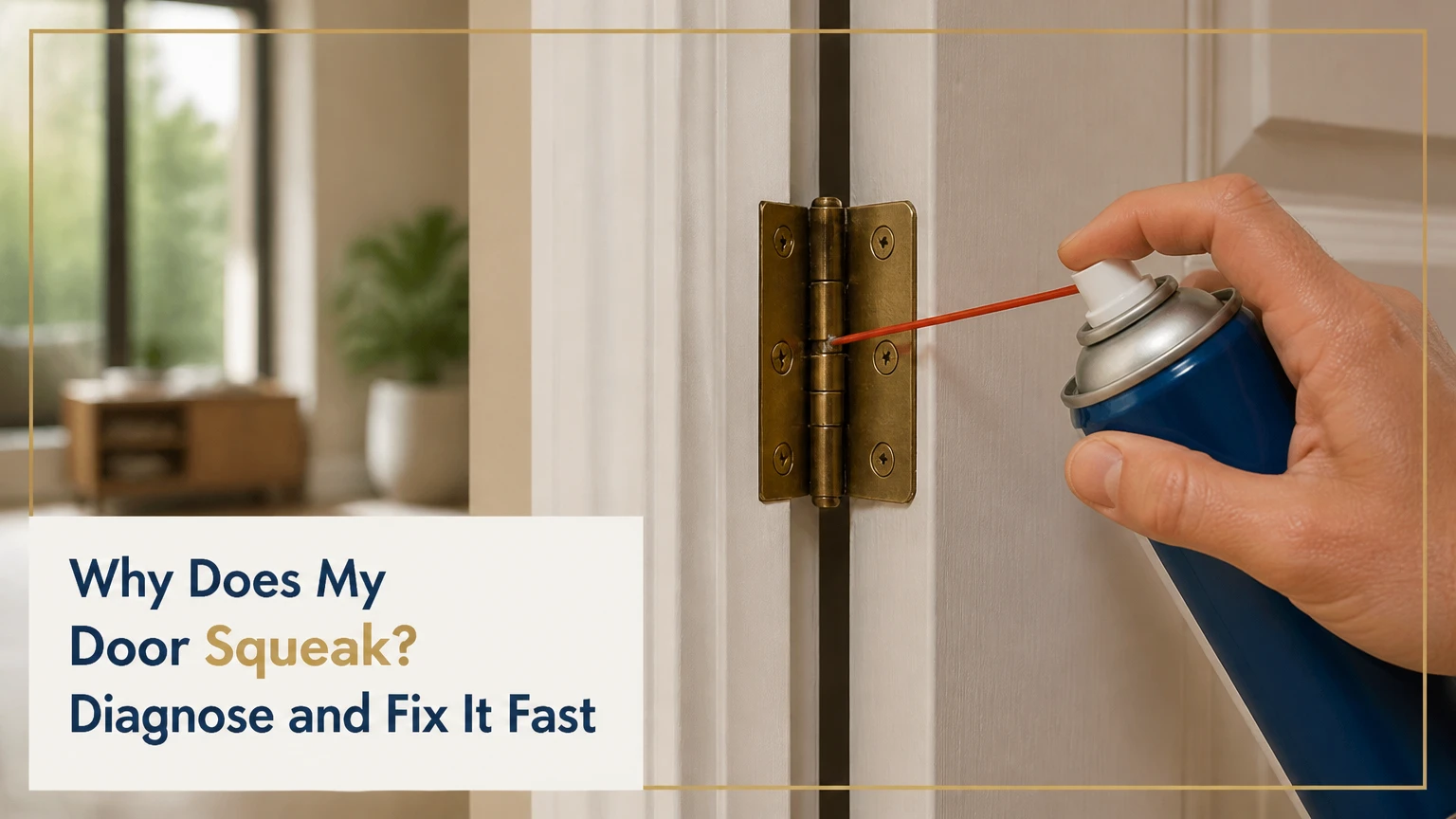
Stop a hinge squeak quickly by applying a small amount of silicone spray or light machine oil to the hinge-pin seams while moving the door. The quick repair normally takes 3-7 minutes, and success means the noise disappears through the full swing without oily streaks on the trim.
Quick Fix: Lubricate the Hinge in Place
Before you start: Use a microfiber cloth, silicone spray or light machine oil, and a piece of cardboard to shield painted surfaces. Keep the application small.
- Protect the surrounding surface. Hold cardboard behind the hinge and place a cloth below it.
- Locate the noisy hinge. Test each hinge instead of spraying all of them.
- Apply the lubricant. Use one short spray, approximately 0.5-1 second, at the top and bottom seam of the hinge pin. For oil, use 2-4 drops.
- Cycle the door. Open and close it 10-15 times, moving through the entire normal arc.
- Wipe the excess. Remove visible fluid from the pin, hinge leaves, door edge, and casing.
- Retest under normal pressure. Operate the handle and latch as you normally would.
You will know the quick fix worked when the squeak stops at every angle and the hinge moves without visible oil migration. If the sound returns within a few days, the joint probably needs cleaning, pin inspection, screw repair, or hinge replacement.
Common mistake: Spraying the hinge face is less effective than reaching the pin seam. Excess product also creates a sticky dust film.
How Do You Deep-Clean and Grease a Hinge Pin?
Deep-clean a hinge by removing one pin at a time, wiping oxidation and debris from the pin, applying a thin grease film, and reinstalling the pin. Allow 10-20 minutes per door, and keep the door supported because removing multiple pins can let a heavy door shift or fall.
Deep Repair: Remove One Pin at a Time
Use a small hammer, nail set or pin punch, pliers, cloth, and white lithium grease. A helper is useful for solid-core, exterior, fire-rated, or unusually heavy doors.
- Support the door. Place a wedge under the latch-side edge or have another person hold the door.
- Start with one hinge. Begin with the hinge that made the most noise. Never remove all hinge pins simultaneously.
- Tap upward carefully. Place the punch at the bottom of the pin and tap lightly. Protect finished surfaces from hammer contact.
- Remove the pin. Pull it free with pliers once enough of the shaft is exposed.
- Inspect the pin. Check for grooves, bends, rust pits, or a flattened end.
- Clean the metal. Wipe with a rag. Use fine abrasive material only on surface oxidation, and avoid removing substantial metal.
- Apply grease. Spread a thin, continuous coat over the shaft. A visible film is enough; a thick layer attracts dirt.
- Reinsert and seat the pin. Align the knuckles and tap the pin flush.
- Repeat one hinge at a time. Test the door after each hinge.
You will know the deep repair worked when the pin rotates quietly, the door remains aligned, and no grease squeezes onto the hinge leaves. A severely grooved or bent pin should be replaced rather than polished indefinitely.
Safety limit: Do not use this method casually on a fire door, a door with concealed spring hardware, or a heavy commercial closer assembly. Those systems can require controlled support and code-compliant hardware.
Why Does a Door Squeak Only at One Angle?
A door that squeaks only at one angle usually has localized contact or alignment stress rather than uniformly dry hinge surfaces. The contact may occur between the slab and jamb, inside one hinge knuckle, at the weatherstrip, or where a loose screw lets the hinge shift under load.
Apply a thin strip of removable painter’s tape to suspected contact points, then operate the door. A rubbed or torn tape strip helps identify the location without marking finished trim.
| Symptom | Likely mechanical cause | Measurement or clue | Repair direction |
|---|---|---|---|
| Top latch-side corner contacts jamb | Door sag from hinge movement | Narrow top gap, wider lower gap | Tighten or repair hinge screws |
| Hinge-side edge rubs | Hinge leaf misalignment | Paint compression near hinge | Check leaf seating |
| Bottom edge scrapes threshold | Seasonal swelling or sag | Rub mark on threshold | Adjust hinges or trim only if needed |
| Exterior door squeaks in cold weather | Seal compression or wood movement | Noise follows temperature | Inspect weatherstrip and gaps |
| Squeak when almost closed | Strike, latch, or seal friction | Noise disappears with latch retracted | Lubricate latch or adjust strike |
How do you fix a rubbing frame?
Fix a rubbing frame by correcting the hinge or clearance problem that causes contact, not by immediately sanding the door. Tighten hinge screws, repair stripped holes, and inspect the door gap before removing material from a wood door.
A longer screw can anchor a loose jamb-side hinge leaf into framing, but a 3-inch screw is not automatically correct. Confirm that the screw will not strike wiring, plumbing, glass, or a shallow frame, and use a screw head that seats properly in the hinge. Over-tightening can pull the hinge out of alignment.
If the wood has swollen from humidity, a temporary rub may disappear during a drier season. Permanent trimming should follow several days of observation when possible.
What Causes a Squeak After Tightening the Screws?
A squeak that remains after tightening screws often comes from a dry pin, a worn hinge barrel, frame contact, or a screw that tightens against damaged wood without restoring alignment. Tightening hardware changes position; it does not lubricate metal or repair a stripped anchor.
Use a wooden matchstick or toothpick repair only for a lightly stripped interior-door hole, and keep the repair conservative. Remove the screw, fill the hole with several wood slivers and wood glue, allow the glue to cure, then reinstall the original screw. For a load-bearing exterior door, use a proper longer screw into sound framing or replace the damaged substrate.
| Failure after repair | Probable reason | Recovery | Escalation point |
|---|---|---|---|
| Squeak returns in 1-7 days | Spray evaporated or migrated | Deep-clean and grease pin | Return suggests wear |
| Door still rubs | Alignment problem, not lubrication | Check gaps and hinge seating | Frame movement or sag |
| Screw spins freely | Stripped wood fibers | Repair hole or anchor framing | Several failed holes |
| Door binds after screw tightening | Hinge pulled out of plane | Loosen, realign, retighten evenly | Bent frame or hinge |
| Noise comes from handle | Latch spring or spindle | Lubricate latch contact points | Broken spring or loose spindle |
Can Painted or Rusty Hinges Be Repaired?
Painted hinges can usually be lubricated at the pin seam, but paint bridging the knuckles can restrict movement and should be removed carefully. Rusty hinges can be cleaned when corrosion is superficial; deep pitting, looseness, or a damaged pin generally justifies replacement.
Do not scrape aggressively against a finished door. Score paint at the hinge edges with a sharp utility blade, protect the surrounding finish, and remove only material that physically binds the knuckles. If the hinge is part of a fire-rated assembly, preserve its approved hardware and finish.
Replacement is often faster than restoration for inexpensive residential hinges. Match the hinge size, corner radius, screw-hole pattern, thickness, and finish. Replace one hinge at a time so the door stays supported.
How Much Does a Squeaky Door Repair Cost?
A typical USA DIY squeaky-door repair costs $0-$25 and takes 5-20 minutes. A handyman commonly charges a minimum service call of about $75-$200, while hinge replacement or frame correction can raise the total to $150-$400 depending on access, door weight, and regional labor rates.
| Repair level | Typical materials | DIY time | Typical USA cost |
|---|---|---|---|
| In-place lubrication | Silicone spray, cloth | 5-10 minutes | $0-$15 |
| Pin cleaning and greasing | Punch, grease, abrasive pad | 15-30 minutes | $5-$30 |
| One hinge replacement | Residential hinge and screws | 20-45 minutes | $8-$35 |
| Stripped-hole repair | Wood glue, slivers, screws | 30-60 minutes | $5-$25 |
| Handyman visit | Labor and minor materials | 30-90 minutes | $75-$200 |
| Frame or jamb correction | Labor, anchors, possible trim work | 1-3 hours | $150-$400 |
These are typical planning ranges, not fixed national prices. A door that requires frame reconstruction, glass handling, security hardware work, or commercial hardware adjustment can exceed them.
What Should Renters, Homeowners, and Businesses Do?
Renters should begin with a controlled, removable treatment such as silicone spray or a small amount of wax at the hinge seam. Homeowners benefit from cleaning and greasing the pin when the door is heavily used, while commercial properties should investigate rated hardware, door closers, and maintenance schedules.
Renter-safe repair
Use a cloth shield, apply minimal silicone, and clean every visible residue. Avoid drilling, replacing jamb screws, sanding the door, or removing hardware covered by a lease or maintenance agreement.
Long-term homeowner repair
Service all hinges on the same door, but remove and treat one pin at a time. Record the hinge size and screw pattern if replacement may be necessary, and inspect the door annually or whenever seasonal movement changes the gap.
Commercial and fire-door repair
Commercial doors may use ball-bearing hinges, spring hinges, continuous hinges, or closers with separate adjustment requirements. Do not disable a closer or substitute residential hardware on a fire-rated opening. Ask a qualified door technician to preserve the opening’s rating and closing function.
Which Door Squeaks Need Professional Help?
Call a professional when the door is heavy, fire-rated, security-critical, glass-panelled, severely sagging, or attached to a damaged frame. Professional help is also appropriate when the door will not latch, the hinge is pulling out of the jamb, or repeated lubrication fails within days.
Stop and escalate when you see:
- Cracked hinge leaves or a hinge barrel separating from its leaf.
- A door closer leaking oil or slamming unpredictably.
- A fire door that no longer closes and latches from its own closer.
- A jamb that moves when the door opens.
- Wiring, plumbing, or structural damage near a proposed long screw.
- A security or multipoint lock that binds after alignment changes.
A squeak alone is rarely urgent. A squeak combined with sagging, failed latching, or visible structural movement deserves prompt attention.
FAQ
Can candle wax stop a squeaky door?
Candle or paraffin wax can reduce hinge friction when rubbed onto a clean, removed pin. Wax is inexpensive and relatively clean, but it is less effective when rust, deep scoring, or loose screws cause the noise. Use a thin coating and wipe away flakes before reinstalling the pin.
Should I lubricate the door hinge or the latch?
Lubricate the door hinge when the noise occurs during the door’s swing, and lubricate the latch when the sound occurs only as the handle retracts or the door closes. A small amount of silicone or suitable machine oil works for many latches, but avoid flooding the lock cylinder with general-purpose oil.
Why does my new door squeak?
A new door can squeak because factory lubricant is insufficient, hinge leaves are misaligned, screws are not fully seated, or paint has bridged the knuckles. Test the door before adding lubricant, because correcting a loose hinge or paint restriction may solve the problem more reliably than masking it with oil.
Can humidity make a door squeak?
Humidity can make a wood door squeak by swelling the slab or jamb and reducing the clearance around the edges. Humidity does not usually create hinge friction by itself, but it can combine with hinge movement and produce rubbing. Compare the door gap during damp and dry conditions before trimming the wood.
How often should door hinges be lubricated?
Lubricate residential door hinges when noise, stiffness, or visible dryness appears, typically every 6-24 months depending on traffic and exposure. Exterior and coastal doors may need more frequent inspection because moisture and salt accelerate corrosion. Deep grease treatment can last longer than an in-place spray.
Should I replace all three hinges?
Replace all three hinges when they are the same age, visibly worn, incorrectly sized, or have incompatible pin diameters. Replace only the failed hinge when the other hinges are sound and matching hardware remains available. Keep the door supported and match the original hole pattern to avoid alignment problems.
The Bottom Line
Why does my door squeak? In most cases, a dry, dirty, rusty, or misaligned hinge creates friction between the pin and knuckles, while a squeak at one angle points more strongly to frame contact or binding. Start with a slow swing test, apply a small amount of silicone, and deep-clean the pin if the noise returns. Check screws and door gaps before replacing hardware, and escalate heavy, fire-rated, or structurally loose doors to a qualified professional.