How to Get Musty Smell Out of Couch Safely
To get a musty smell out of a couch, remove moisture and odor sources first, then vacuum, wash compatible covers, deodorize dry upholstery, and dry every layer completely. Baking soda helps with light surface odor, but recurring smells from damp foam, mold, or unfinished wood require deeper cleaning, material replacement, or professional remediation.
Key Facts at a Glance
- A musty couch odor usually indicates trapped moisture, microbial growth, contaminated padding, or odor absorbed from the room.
- Check the upholstery cleaning code before using water, vinegar, alcohol, or an extractor.
- Drying matters as much as cleaning because damp foam can develop a stronger odor within 24-48 hours.
- Baking soda is appropriate for light surface odor, but it cannot remove mold inside cushion foam.
- Maintain indoor relative humidity below 60%, with 40%-55% a practical target for odor prevention.
- Do not mix vinegar with bleach, ammonia, or other chemical cleaners.
What Causes a Musty Couch Smell?
A musty couch smell usually comes from volatile compounds released by mildew, bacteria, damp foam, dirty fabric, smoke, or unfinished wood. Moisture may enter through spills, basement humidity, wet cleaning, condensation against an exterior wall, or a leak beneath the furniture.
The odor source is often deeper than the fabric surface. Upholstery covers, batting, foam, burlap decking, wooden rails, and the floor beneath the couch can each hold moisture or odor. A smell that becomes stronger when someone sits down often points to cushion foam or compressed padding rather than the outer textile.
The U.S. Environmental Protection Agency recommends controlling indoor moisture and keeping indoor relative humidity below 60%, ideally between 30% and 50%, to discourage mold growth. A home target of 40%-55% is practical for most U.S. rooms, although humid regions may require a dehumidifier.
Diagnose the odor before cleaning
| Odor pattern | Likely source | First inspection | Recommended response |
|---|---|---|---|
| Mild stale smell on the surface | Fabric residue, dust, body oils | Armrests and seat tops | Vacuum, dry deodorize, wash covers |
| Strong smell after sitting | Foam or batting | Cushion seams and underside | Inspect inserts, dry deeply, consider extraction |
| Sour or earthy odor | Mildew or persistent dampness | Back, decking, floor, wall gap | Find moisture, isolate furniture, assess mold |
| Smoky or greasy odor | Tobacco, cooking, pets, oils | Fabric and wood frame | Enzyme or professional cleaning, depending on material |
| Odor concentrated near legs | Damp floor, rug, or unfinished wood | Floor beneath couch | Dry floor, clean frame, inspect subfloor |
Visible mold changes the task. Small areas on a washable, nonporous surface may be cleanable, but porous foam, batting, particleboard, and heavily affected upholstery can retain contamination. The CDC advises people with asthma, chronic lung disease, or immune suppression to avoid mold cleanup or use professional help.
Which Couch-Cleaning Method Should You Use?
The best method depends on the upholstery code, odor depth, material value, and whether moisture is still present. Use dry vacuuming and baking soda for a light surface smell, low-moisture cleaning for washable fabric, and professional assessment when the odor returns or visible mold reaches padding.
| Method | Typical cost | Working time | Best use and limitation |
|---|---|---|---|
| HEPA vacuum plus baking soda | $5-$15 | 2-12 hours | Light fabric odor; cannot treat contaminated foam |
| Washable cover cleaning | $5-$20 | 1-2 days | Removable cotton or synthetic covers; shrinkage risk |
| Diluted upholstery cleaner | $8-$25 | 4-12 hours | W-coded synthetic fabric; requires rapid drying |
| Activated charcoal bags | $10-$30 | 2-7 days | Ambient odor around furniture; does not clean upholstery |
| Low-moisture professional cleaning | $100-$300 | 2-6 hours plus drying | Deep fabric odor with controlled water use |
| Cushion or foam replacement | $80-$500 | 1-7 days | Persistent contamination inside porous inserts |
Fabric labels commonly use W for water-based cleaning, S for solvent-based cleaning, WS or SW for either method, and X for vacuum-only care. A tag is often under a cushion or attached to the platform. If the code is missing, treat the couch as delicate until a hidden spot test or manufacturer guidance confirms compatibility.
Vinegar deserves a precise limitation. Diluted white vinegar may reduce some odor compounds and provide mild surface antimicrobial action, but vinegar is not a dependable treatment for established mold inside porous upholstery. Its water content can worsen the problem if foam remains damp.
Before You Start
| Requirement | Typical specification | Why it matters |
|---|---|---|
| Total time | 6-24 hours | Includes deodorizing and complete drying |
| Active work | 45-90 minutes | Covers inspection, vacuuming, and treatment |
| DIY supply cost | $10-$35 | Includes baking soda, gloves, cloths, and bags |
| Drying conditions | 65-80°F, airflow, RH below 60% | Reduces the chance of renewed microbial growth |
| Main tools | HEPA vacuum, fan, moisture meter | Reaches dust, dries padding, checks hidden dampness |
| Prerequisite | Upholstery code and hidden spot test | Prevents dye bleed, rings, or finish damage |
Gather 1-2 cups of baking soda for a standard sofa, two clean white cloths, nitrile gloves, a soft upholstery brush, a fan, and a vacuum with an upholstery attachment. Use a moisture meter if the couch has been wet or sits in a basement.
Do not begin with perfume, essential oils, or fabric spray. Fragrance can conceal the odor while leaving moisture and contamination untouched, and essential oils may stain textile fibers or create respiratory irritation for people and pets.
How to Get Musty Smell Out of Couch: Step-by-Step
The safest general process takes six steps and usually requires 6-24 hours, depending on drying conditions. The factor that most determines success is complete drying of the cushion interior, not the strength of the deodorizer.
Step 1: Identify the Upholstery and Odor Source
Remove loose cushions, inspect the care label, and smell each component separately. Check the underside, zipper area, decking, back panel, wood rails, rug, and wall behind the couch.
Use a flashlight to look for spotting, tide marks, dampness, swollen particleboard, rusted fasteners, or compressed dark material. A moisture meter reading that is noticeably higher than a dry nearby surface indicates further investigation, although meter readings vary by material.
You’ll know it worked when: you can identify whether the strongest odor comes from fabric, foam, wood, floor, or room air.
Common mistake: treating the visible seat while leaving a damp rug or wall gap beneath the couch untouched.
Step 2: Remove Covers and Dry the Components
Take off removable covers and read the washing instructions before placing them in a machine. Close zippers, wash compatible covers in cool or warm water according to the label, and avoid high heat until you confirm that the cover has not shrunk.
Stand cushions on their edges in a ventilated room. Position a fan so air moves across, rather than directly forcing dust into, the fabric. Keep leather away from prolonged direct sun because heat can dry oils and cause cracking.
You’ll know it worked when: covers have no detectable dampness at seams, hems, or zipper flaps.
Common mistake: putting a slightly damp cover back on foam, which traps humidity and recreates the odor.
Step 3: Vacuum Every Surface and Cavity
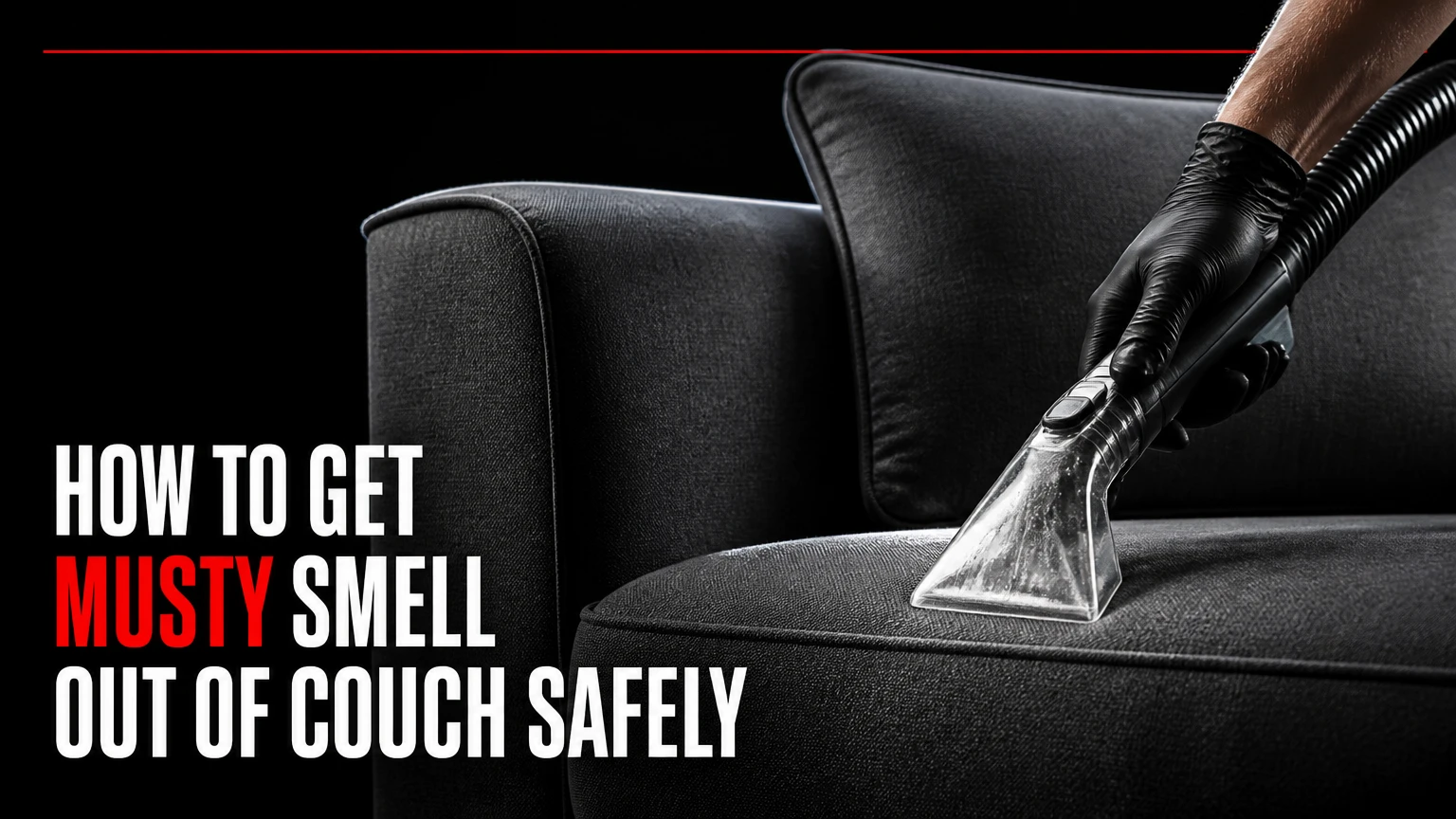
Vacuum the couch slowly with an upholstery tool, using overlapping passes on both sides of each cushion. Clean the seat deck, underside fabric, crevices, seams, rear panel, wooden joints, and the floor beneath the furniture.
A HEPA-filter vacuum is preferable when dust, pet dander, or suspected mold is present because it reduces exhaust redistribution. Do not scrub visible mold with a household vacuum, since agitation can spread particles; isolate the item and seek professional advice when contamination is extensive.
You’ll know it worked when: loose debris no longer appears in the creases and the odor is weaker before any deodorizer is applied.
Common mistake: vacuuming only the top of the couch, where the least accessible odor-holding material may not be located.
Step 4: Apply the Lowest-Risk Deodorizing Treatment
For fabric coded W or WS, spread a thin, even layer of baking soda over dry upholstery. Use about 1 cup for a standard three-seat sofa, leave it for 2-12 hours, then vacuum slowly until no powder remains.
For S-coded upholstery, use only the solvent product specified by the manufacturer or a professional cleaner. For X-coded upholstery, use vacuuming only. Never wet-clean an X-coded couch without written manufacturer approval.
A light vinegar mist is sometimes used on compatible W-coded fabric, but it should not saturate cushions. If used, mix 1 part distilled white vinegar with 3 parts water, apply a minimal amount to a white cloth rather than spraying the foam, and stop if color transfers.
You’ll know it worked when: the surface smells neutral after vacuuming and no powder, sticky residue, or dampness remains.
Common mistake: rubbing baking soda deeply into foam, where powder can remain trapped and attract moisture.
Step 5: Clean the Frame and Surrounding Area
Wipe finished wood with a barely damp cloth and a manufacturer-approved wood cleaner. Dry immediately with a second cloth. Test any diluted vinegar solution on an inconspicuous area first, since acidic liquids can dull wax, soften some finishes, or mark unfinished wood.
For unfinished wood inside the frame, use minimal moisture and strong ventilation. If the dry frame continues to smell after cleaning, a professional may use a shellac-based odor-sealing primer, but sealing wet or contaminated wood only hides the source temporarily.
Clean the rug, baseboard, wall, and floor beneath the couch. Dust and mildew odor can transfer back to upholstery after the couch has been treated.
You’ll know it worked when: the frame, floor, and couch have similar neutral odors after several hours apart.
Common mistake: spraying cleaner into joints or staples, where liquid dries slowly and can feed further odor.
Step 6: Dry, Reassemble, and Recheck
Keep cushions separated and use one or two fans for several hours. Open windows only when outdoor humidity is lower than indoor humidity. A dehumidifier can accelerate drying in a basement or humid room.
Do not reassemble the couch until covers, foam, batting, and the frame are fully dry. Check thick seams and cushion centers by touch, smell, and, when appropriate, a moisture meter. Recheck the couch after 24 hours and again after one week.
You’ll know it worked when: the odor remains absent after the couch is used and the cushions are compressed.
Common mistake: judging success immediately after vinegar, fragrance, or sunlight has temporarily altered the smell.
What Works Best for Different Couch Materials?
Material determines both the cleaning method and the acceptable moisture level. Cotton, linen, microfiber, leather, velvet, and antique upholstery do not tolerate the same products, dwell times, or agitation.
| Material or code | Safe starting method | Avoid | Typical escalation |
|---|---|---|---|
| W-coded polyester | Vacuum, baking soda, low-moisture cleaner | Saturation and hot water | Upholstery extraction |
| S-coded velvet | Vacuum, approved solvent | Vinegar and water | Textile specialist |
| WS microfiber | Vacuum, measured water-based cleaner | Hard scrubbing | Low-moisture extraction |
| X-coded antique fabric | Gentle vacuum only | All sprays and powders | Conservation professional |
| Finished leather | Vacuum, dry cloth, leather cleaner | Vinegar, alcohol, baking soda paste | Leather specialist |
| Unfinished wood | Dry brush, barely damp cloth | Soaking and bleach | Odor-sealing primer after drying |
How should you treat a leather couch?
Leather requires a dry-first approach because liquid can darken hides, damage finishes, and leave odor in seams or backing. Vacuum with a soft brush, wipe with a dry or barely damp white cloth, and use a leather cleaner approved for that finish on a hidden test area.
Place activated charcoal near, not on, the leather for 2-7 days. Improve room ventilation and inspect the underside, where fabric dust covers and foam may hold the musty odor. Do not use rubbing alcohol, vinegar, or loose baking soda directly on finished leather unless the manufacturer specifically allows it.
How should you handle removable slipcovers?
Removable slipcovers should be cleaned according to their care label and dried completely before reinstallation. Wash one cover first if shrinkage or dye bleeding is possible, then compare its fit and color with an untreated cover.
If the cleaned cover smells neutral but the couch still smells musty, the source is probably foam, batting, decking, or the wooden frame. Washing the same cover repeatedly will not solve contamination below it.
How Long Does Couch Odor Removal Take?
Light surface odor commonly improves after 2-12 hours of baking soda contact and thorough vacuuming, while damp cushion foam may require 24-48 hours of ventilation or professional drying. A recurring odor can take several days to diagnose because the source may be outside the upholstery.
| Situation | DIY active time | Drying or waiting time | Expected next decision |
|---|---|---|---|
| Light stale fabric odor | 20-40 minutes | 2-12 hours | Recheck after vacuuming |
| Washable slipcovers | 15-30 minutes | 12-36 hours | Reinstall only when dry |
| Damp removable cushions | 30-60 minutes | 24-48 hours | Replace foam if odor persists |
| Finished wood odor | 20-45 minutes | 6-24 hours | Assess frame or sealer |
| Professional extraction | 1-3 hours | 6-24 hours | Recheck after 48 hours |
| Visible mold in porous material | Do not disturb | Variable | Contact remediation professional |
Sunlight can warm and dry a cushion, but it is not a dependable mold-killing procedure. Direct UV exposure can fade floral upholstery, weaken some fibers, and heat foam unevenly, so use bright indirect light or short monitored exposure instead.
What Should You Do If the Smell Returns?
A returning musty smell usually means moisture or contaminated porous material remains after surface cleaning. Test the couch after 24 hours and one week, then inspect cushion interiors, the underside, adjacent walls, rugs, HVAC airflow, and the floor.
| Symptom after treatment | Probable cause | Corrective action | DIY limit |
|---|---|---|---|
| Odor returns when sitting | Foam releases trapped compounds | Extract or replace insert | Replacement may be safer |
| Odor is strongest underneath | Damp decking or floor | Lift couch, dry area, inspect wood | Stop if mold is widespread |
| Vinegar smell masks the original odor | Wet treatment residue | Ventilate and dry fully | Do not add fragrance |
| Black or green spotting expands | Active microbial growth | Isolate and document area | Seek remediation advice |
| Only room air smells musty | Basement, HVAC, or leak | Check humidity and source | Furniture cleaning alone fails |
| Odor returns after extraction | Overwetting or incomplete drying | Professional reassessment | Avoid another DIY rinse |
A couch with mold inside polyurethane foam, fiberfill, particleboard, or heavily affected upholstery may not be economically or safely cleanable. Replacement is often more reliable than repeatedly wetting porous material, especially when the couch has a low replacement value.
When Should You Hire a Professional?
Hire an upholstery or mold professional when the couch has visible mold, a strong odor after two complete dry-cleaning attempts, water damage, valuable antique fabric, extensive smoke contamination, or foam that remains damp. Professional upholstery cleaners can select low-moisture or solvent methods based on the textile code and use extraction equipment that removes more soil than household vacuuming.
Typical USA prices vary by region, furniture size, fabric, access, and treatment complexity.
| Professional service | Typical USA price | Typical duration | Best indication |
|---|---|---|---|
| Small chair or loveseat cleaning | $75-$175 | 1-2 hours | Localized fabric odor |
| Standard three-seat sofa cleaning | $100-$300 | 1-3 hours | Deep soil and odor |
| Sectional cleaning | $180-$500 | 2-4 hours | Multiple cushions and seats |
| Leather sofa cleaning | $150-$400 | 1-3 hours | Finished leather care |
| Cushion foam replacement | $80-$500 | 1-7 days | Persistent internal odor |
| Mold assessment or remediation | $300-$3,000+ | 1-5 days | Visible or extensive contamination |
Ask for the cleaning method, expected drying time, insurance, fabric-code experience, and whether odor treatment is included. A quote that promises guaranteed odor removal without inspecting the couch is less credible than a quote that identifies the material and source first.
Common Mistakes and How to Fix Them
Oversaturating the cushions: Excess water penetrates foam and may create a stronger mildew odor. Use low-moisture methods, remove covers where possible, and provide continuous airflow.
Using bleach on upholstery: Bleach can discolor fabric, weaken fibers, and fail to reach contamination inside foam. Follow the care code and use a qualified professional for mold concerns.
Mixing cleaning chemicals: Never combine vinegar with bleach or ammonia. The resulting gases can injure the eyes and respiratory system.
Applying alcohol without testing: Isopropyl alcohol can affect dyes, coatings, and leather finishes. Test a hidden area with a small amount on a white cloth, allow it to dry, and inspect for transfer or color change.
Adding essential oils: Fragrance changes perception but does not remove the source. Oils can stain fabric and may irritate pets, particularly cats and birds.
Using a sealed bag with damp cushions: Enclosing vinegar-misted or wet cushions can trap humidity and worsen microbial growth. Dry cushions in open airflow instead.
Replacing deodorizer instead of fixing humidity: If room humidity remains high, the couch can regain odor even after professional cleaning. Use a hygrometer and run a dehumidifier when readings stay above 60%.
How Do You Prevent the Odor From Returning?
Prevent recurrence by controlling moisture, cleaning spills immediately, increasing airflow, and keeping the couch away from damp walls and floors. Maintain room humidity at 40%-55% when practical, leave several inches between furniture and exterior walls, and inspect basement furniture after storms or plumbing leaks.
Vacuum upholstery monthly, wash removable covers according to their labels, and clean pet or food spills with a compatible product as soon as possible. Do not place a couch back on a wet rug, against a damp wall, or over a recently cleaned floor.
Use a hygrometer near the couch for a week. If the reading remains above 60%, address the room with ventilation, air conditioning, a dehumidifier, or building repairs rather than relying on repeated fabric deodorizing.
Frequently Asked Questions
Will baking soda remove a mildew smell from couch cushions?
Baking soda can reduce light surface odor, but it will not reliably remove mildew growing inside cushion foam. Apply about 1 cup to a dry standard sofa, wait 2-12 hours, and vacuum thoroughly. If the smell returns when the cushion is compressed, inspect or replace the insert.
Can I spray Febreze or another fabric freshener on a musty couch?
Fabric freshener can temporarily mask odor, but it does not remove moisture, mold, bacteria, or contaminated foam. Check the upholstery code before using any spray, and never apply fragrance to visibly moldy or damp material. Fix the source first, then use an approved product sparingly.
Does sunlight kill the musty smell in a sofa?
Sunlight may help dry a cushion and reduce some odor, but it is not a dependable mold-remediation method. Direct exposure can fade upholstery and damage leather or foam. Use brief, monitored exposure with strong airflow, and rely on source removal and complete drying.
Should I throw away couch cushions with mildew?
Replace cushion foam or affected inserts when mildew penetrates porous material, the odor persists after complete drying, or visible growth returns. Surface-cleanable, washable covers may be retained if they are undamaged and fully cleaned, but a contaminated insert can re-contaminate them.
How can I remove musty odor without vinegar?
Use thorough HEPA vacuuming, baking soda on compatible dry fabric, activated charcoal nearby, ventilation, and humidity control. For deeper odor, choose a manufacturer-approved solvent or professional low-moisture extraction. Vinegar is optional and unsuitable for many leathers, delicate textiles, and saturated foam.
Is a musty couch dangerous?
A musty smell does not prove that a couch is dangerous, but it signals moisture or contamination that deserves inspection. People with asthma, mold allergies, chronic lung disease, or weakened immune systems should avoid disturbing visible mold and consult a qualified professional.
The Bottom Line
To get musty smell out of couch upholstery, diagnose the source, vacuum every surface, wash only compatible covers, use baking soda for light dry odor, and dry all components completely. Do not saturate foam or trust fragrance to solve recurring odor. If the smell returns, visible mold appears, or the couch has water damage, professional cleaning, foam replacement, or remediation is the safer next step.