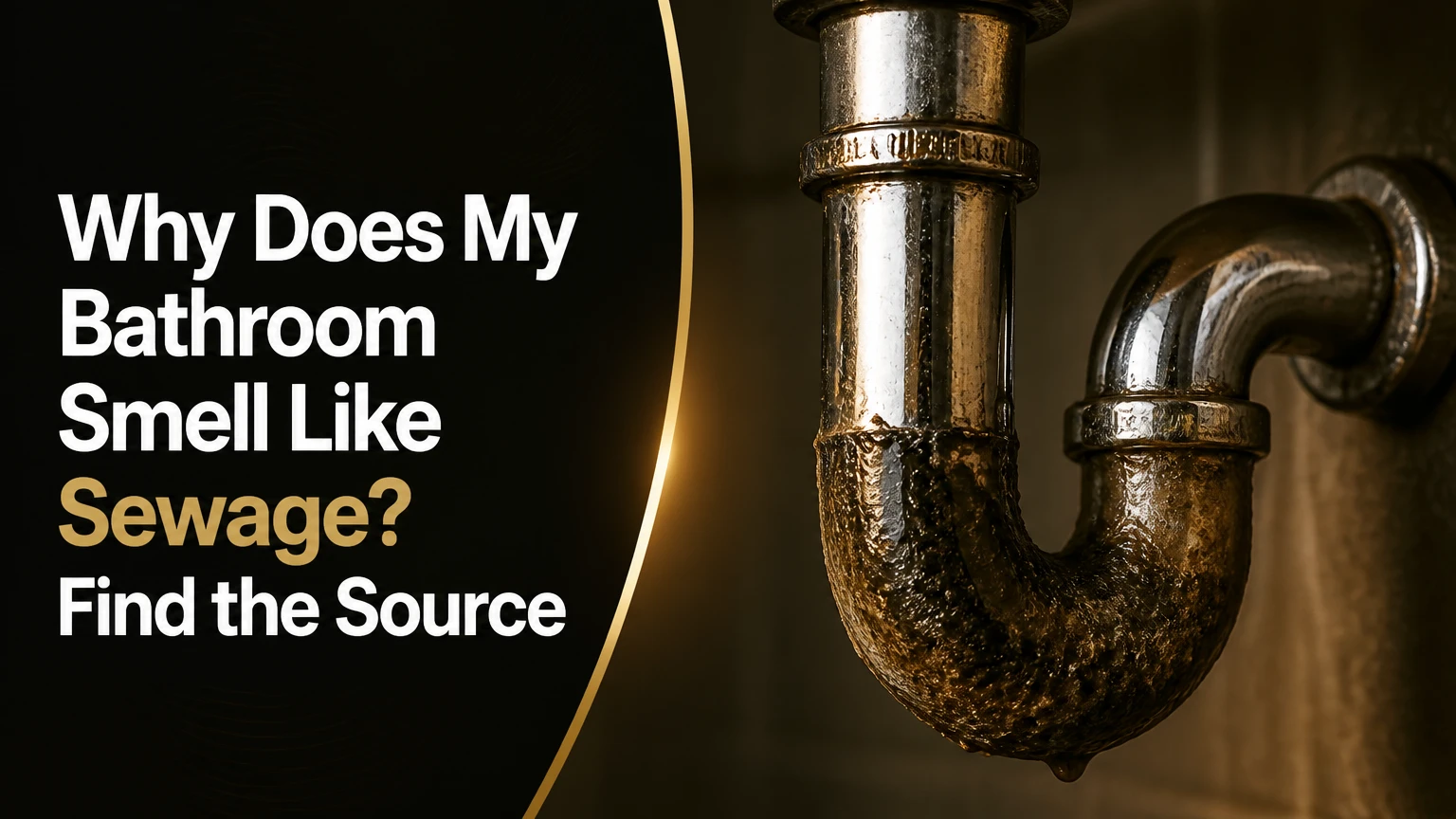
Why Does My Bathroom Smell Like Sewage? Find the Source
A bathroom smells like sewage when sewer gas or decomposing organic material enters the room through a failed plumbing seal, blocked vent, contaminated drain, defective toilet seal, or damaged pipe. The fastest diagnosis is to identify whether the odor is strongest at a drain, under the toilet, near a wall or floor, or throughout the bathroom, then test the matching plumbing component.
Key Facts at a Glance
- A dry P-trap allows sewer gas to enter through a sink, shower, bathtub, or floor drain.
- A sewage smell directly beneath a toilet often indicates a failed toilet-to-flange seal, especially when the toilet moves.
- Hair, soap, toothpaste, and skin oils can create odor-producing biofilm even when a P-trap contains water.
- Gurgling, bubbling, slow drainage, or several affected fixtures point toward a vent or drain-line problem.
- Sewer gas can contain hydrogen sulfide, methane, ammonia, and other compounds, so persistent odor deserves prompt investigation.
- Typical USA plumbing repairs range from $0 for trap restoration to more than $3,000 for concealed or underground pipe work.
What Does a Sewage Smell Usually Mean?
A sewage smell usually means the bathroom has lost a plumbing barrier or has organic buildup close to a drain opening. The most common low-cost cause is an evaporated trap in an unused fixture, while the most serious causes include a failed toilet seal, broken drain line, blocked vent, or sewer backup.
The odor itself does not identify the failed part. Hydrogen sulfide often smells like rotten eggs, but smell is an unreliable safety instrument because people can become less sensitive to the odor during continued exposure. NIOSH describes hydrogen sulfide as “a colorless gas with a rotten egg odor,” and the compound can also impair odor perception at higher concentrations.
Sewer gas is not the same as a dirty bathroom smell. A dirty drain may contain bacteria and decomposing residue without an open connection to the sewer system. A sewer-gas leak, however, indicates that a water seal, mechanical seal, pipe joint, or venting system is not performing correctly.
Is a Sewage Smell Dangerous?
A brief, mild odor is usually resolved by restoring a trap or cleaning a drain, but a strong or persistent sewage smell requires ventilation and source control. Leave the bathroom if anyone experiences headache, dizziness, nausea, eye irritation, breathing difficulty, or unusual drowsiness.
Do not smoke, light candles, operate a flame, or create sparks near a strong sewer odor. Methane is flammable, and sewer gas can collect in poorly ventilated spaces. Open a window if possible, avoid electrical switching near the suspected source, and contact a plumber or emergency service when the odor is intense, widespread, or accompanied by wastewater.
How Do Plumbing Traps and Vents Block Sewer Gas?
A P-trap blocks sewer gas with standing water, while a plumbing vent stabilizes air pressure so drainage does not siphon water out of the trap. Sinks, showers, bathtubs, floor drains, and many other fixtures rely on this combination of a water seal and correctly functioning vent system.
A P-trap is the curved section of drain piping beneath a fixture. The bend retains water after the fixture drains. A toilet has an internal trap, while its separate connection to the floor requires an airtight seal at the closet flange.
A vent stack usually rises through the roof. It allows air into the drainage system and routes normal sewer vapors above the building. A vent does not replace a trap, and a trap does not correct a blocked vent.
| Plumbing component | Normal function | Failure symptom | Practical check |
|---|---|---|---|
| Sink P-trap | Holds 2-4 inches of water | Odor from sink drain | Shine a light under cabinet and run water |
| Shower trap | Blocks gases below shower drain | Smell strongest at grate | Add water and retest after 30 minutes |
| Toilet trap | Retains flush water inside bowl | Odor from bowl or poor flush | Check bowl water level and flushing |
| Closet flange seal | Seals toilet base to drain | Odor under toilet | Check rocking, staining, and dampness |
| Roof vent | Equalizes drainage pressure | Gurgling or siphoned traps | Compare several fixtures during drainage |
| Drain line | Carries wastewater away | Slow drains or backup | Test multiple fixtures and cleanouts |
Why Does My Bathroom Smell Like Sewage?
The main causes are a dry P-trap, drain biofilm, blocked vent, failed toilet seal, damaged drain pipe, sewer backup, or a non-sewer odor source. Odor location and timing separate these causes more reliably than the odor description alone.
| Cause | Strongest clue | Affected area | Typical first response |
|---|---|---|---|
| Dry P-trap | Fixture unused for 1-8 weeks | One drain | Add water and retest |
| Drain biofilm | Odor rises directly from drain | Sink or shower opening | Remove hair and scrub parts |
| Blocked vent | Gurgling during drainage | Two or more fixtures | Arrange vent inspection |
| Failed toilet seal | Smell under toilet or after flush | Toilet base and floor | Stop rocking and inspect seal |
| Cracked drain pipe | Wall, ceiling, or floor odor | Hidden building cavity | Request leak or smoke testing |
| Sewer backup | Slow drainage, wastewater, stains | Multiple fixtures | Stop water use and call promptly |
| Septic problem | Indoor and outdoor sewage odor | Whole home or drain field | Check tank and service history |
Why Does a Drain Smell While the Trap Still Holds Water?
A drain can smell with a full trap because biofilm may coat the stopper, overflow channel, drain grate, or upper pipe above the water seal. Hair and soap residue trap bacteria and oils, producing an odor at the room side of the plumbing barrier.
Remove the sink stopper and clean its underside, shaft, and overflow opening. For a shower, lift the grate and remove visible hair, then scrub the first several inches of pipe with a suitable brush. Enzyme drain products can help digest organic residue, but they cannot repair a failed seal or clear a structural obstruction.
Baking soda followed by vinegar may loosen light residue, but the fizzing reaction has limited reach and does not substitute for mechanical cleaning. Never combine bleach, ammonia, acidic drain cleaner, or commercial products because dangerous vapors can form.
Where Is the Sewage Odor Coming From?
Source location provides the most useful first diagnosis: a drain points toward trap or biofilm problems, the toilet base points toward a flange seal, and a wall or floor odor raises concern about hidden piping. Isolate fixtures before buying chemicals or dismantling plumbing.
Close the bathroom door for 15-30 minutes, then check each location separately. Smell near, but do not place your face over, the sink drain, shower grate, toilet base, floor-wall joint, vanity cabinet, and exhaust fan. A strip of tissue can reveal airflow near gaps around a toilet or pipe penetration.
| Odor location or timing | Most likely explanation | Confirmation clue | Next action |
|---|---|---|---|
| Shower drain after 2 weeks unused | Dry trap or biofilm | Water temporarily removes odor | Add water, then clean grate |
| Under toilet after flushing | Failed closet seal | Damp floor or toilet movement | Have seal and flange inspected |
| Sink drain with clean trap | Stopper or overflow biofilm | Odor follows stopper removal | Scrub stopper and overflow |
| Wall or ceiling below bathroom | Concealed drain leak | Staining, soft drywall, peeling paint | Arrange moisture and pipe testing |
| Whole bathroom after rain | Vent pressure or sewer issue | Odor also outdoors or in drains | Inspect vent and building sewer |
| Bathroom exhaust fan | Contaminated duct or animal | Smell strongest when fan runs | Inspect grille and duct path |
What Should You Do First?
Restore water seals in every bathroom fixture, ventilate the room, and perform a location check before attempting repairs. The initial check takes about 10 minutes and costs $0 when the problem is an evaporated trap.
Step 1: Refill Every Accessible Trap
Run water for 30-60 seconds into each sink, shower, and bathtub. Flush every toilet, and pour approximately 1 quart of water into an accessible floor drain.
For a rarely used drain, a small amount of mineral oil can slow evaporation, but local plumbing rules and building conditions differ. A trap primer or approved trap-seal insert is a better long-term solution for a floor drain that repeatedly dries out.
You will know the test worked when the odor drops substantially within 15-30 minutes. If the smell returns within hours, pressure may be siphoning the trap, the drain may have a leak, or the odor may originate elsewhere.
Step 2: Clean the Drain Opening
Remove the sink stopper or shower grate. Pull out hair and sludge with a plastic drain tool, then scrub the stopper, grate, visible pipe wall, and sink overflow with detergent and a narrow brush.
Rinse with hot tap water rather than boiling water, particularly with older PVC, acrylic, or glued plastic fittings. Follow an enzyme cleaner label if organic buildup remains. Do not use an enzyme product immediately after caustic drain cleaner because chemical residue can damage the product and create a splash hazard.
You will know the cleaning worked when the odor disappears at the opening after the drain remains unused for several hours. If the room still smells, test the toilet and hidden pipe locations.
Step 3: Check the Toilet Base
Look for water staining, soft flooring, darkened caulk, or a toilet that rocks when gently pushed at the bowl. A moving toilet can break the seal between the bowl, closet flange, and floor, allowing sewer gas and liquid leakage.
Do not keep tightening the toilet bolts to stop movement. Porcelain can crack, and a damaged flange may require a repair ring or other corrective work. Replacing a wax ring requires removing the toilet, inspecting flange height and condition, installing a new seal, and resetting the bowl without over-tightening.
You will know the repair is sound when the toilet remains stable, the base stays dry after several flushes, and no odor returns over 24-48 hours. A rubber seal is not automatically better than wax; compatibility, flange height, alignment, and manufacturer instructions determine suitability.
Step 4: Test for Vent or Main-Drain Problems
Run the sink, flush the toilet, and listen at nearby drains. Gurgling, bubbling, slow drainage, or a changing water level indicates abnormal air movement or restriction.
A blocked roof vent can cause negative pressure that pulls water from traps. A partially blocked branch drain or building sewer can produce similar symptoms, so a vent is not proven to be the cause merely because gurgling occurs.
Roof work has a fall risk that outweighs modest tool savings for most homeowners. A plumber can inspect the vent, use an auger or camera, and distinguish a roof obstruction from a deeper drain-line problem.
What Does Gurgling Indicate?
Gurgling usually indicates air moving through restricted or poorly vented drainage piping, and the sound often appears when another fixture drains. The combination of gurgling, slow drainage, and several affected fixtures is more concerning than an isolated smelly sink.
A vent obstruction may involve leaves, a bird nest, ice, or construction debris. A drain restriction may involve grease, roots, collapsed pipe, or accumulated solids. In an apartment, the problem can exist in a shared stack or building sewer rather than inside the bathroom.
| Symptom pattern | Likely system area | DIY limit | Recommended response |
|---|---|---|---|
| One smelly drain, normal flow | Fixture opening or trap | Clean accessible parts | Retest overnight |
| One gurgling sink | Branch vent or branch drain | Avoid roof access | Plumber if recurring |
| Several gurgling fixtures | Main vent or building drain | No chemical treatment | Schedule prompt diagnosis |
| Lowest fixture backs up | Main sewer or septic system | Stop water use | Emergency plumbing service |
| Odor after heavy rain | Sewer surcharge or vent issue | Observe outdoor conditions | Contact utility or plumber |
| Odor in multiple units | Shared stack or building sewer | Tenant cannot repair | Notify landlord immediately |
Why Does the Smell Come From Behind the Toilet?
A smell behind or beneath the toilet most often comes from a failed closet flange seal, a cracked toilet, a loose connection, or contaminated flooring. The diagnosis becomes more likely when the toilet rocks, the floor is damp, or the smell intensifies immediately after flushing.
A toilet-to-floor seal does not normally require visible water leakage to fail. Sewer gas can escape through a small gap around the flange. Floor movement, an uneven flange, loose bolts, repeated toilet rocking, and incorrect installation can all compromise the seal.
A professional should inspect the flange, subfloor, toilet base, supply connection, and nearby drain pipe. If the subfloor is soft, simply installing another wax ring may conceal a larger structural repair.
Can a Septic System Cause a Bathroom Sewage Smell?
A septic system can cause indoor sewage odor when the tank is overfull, the drain field is failing, the house sewer is restricted, or a fixture trap and vent are defective. Septic service is more likely when several drains smell and the tank has exceeded its normal pumping interval.
Typical residential septic tanks are often pumped every 3-5 years, but occupancy, tank size, garbage-disposal use, and solids accumulation change that interval. Local septic authorities and the system designer provide better guidance than a universal schedule.
Check for slow drains, wet or unusually green drain-field areas, outdoor sewage odor, alarms, and recent heavy rain. Do not open a septic tank yourself because toxic gas and collapse hazards exist. Contact a licensed septic professional.
What Does Professional Repair Cost in the USA?
Typical USA costs range from $150-$300 for a diagnostic visit or sewer camera inspection, $150-$350 for a toilet seal repair, and $500-$3,000 or more for concealed drain-line work. Local labor rates, emergency timing, access, permits, pipe material, and excavation determine the final price.
| Professional service | Typical USA price | Typical duration | Main cost variable |
|---|---|---|---|
| Diagnostic plumbing visit | $100-$250 | 30-90 minutes | Emergency or standard hours |
| Camera sewer inspection | $150-$500 | 1-2 hours | Cleanout access and line length |
| Toilet seal replacement | $150-$400 | 1-3 hours | Flange and flooring condition |
| Vent inspection or clearing | $200-$600 | 1-3 hours | Roof height and obstruction |
| Branch drain cleaning | $150-$500 | 1-3 hours | Blockage location and access |
| Trenchless pipe repair | $2,000-$8,000 | 1-3 days | Length, diameter, and lining method |
| Excavated drain repair | $500-$5,000+ | 1-5 days | Concrete, landscaping, and depth |
These figures are typical planning ranges, not guaranteed quotes. A plumber should explain whether the charge covers camera access, labor, materials, restoration, permits, and after-hours fees.
Which Fix Is Appropriate for Each Situation?
A dry trap or accessible biofilm is suitable for a careful DIY response, while a toilet seal may be manageable for an experienced homeowner with help to lift the fixture. Vent, concealed pipe, shared-stack, and sewage-backup problems deserve professional diagnosis because an incorrect repair can spread contamination or conceal structural damage.
| Situation | Best first fix | Typical time | DIY suitability |
|---|---|---|---|
| Guest bathroom unused for a month | Refill traps | 10 minutes | Beginner |
| Smell only at shower grate | Remove hair and scrub | 20-45 minutes | Beginner |
| Toilet rocks or stains floor | Inspect flange and seal | 1-3 hours | Intermediate |
| Gurgling in two bathrooms | Vent and drain diagnosis | 1-3 hours | Professional |
| Odor from wall with damp drywall | Leak and smoke testing | 2-8 hours | Professional |
| Main drain backup | Stop water and emergency call | Same day | Professional |
| Repeated dry floor drain | Trap primer or trap seal | 1-4 hours | Professional or advanced |
A common practitioner rule is to repeat the test after the fixture sits unused. A temporary improvement after adding water identifies a trap-related pathway, but it does not prove evaporation was the original cause.
Common Mistakes That Keep the Odor Coming Back
Pouring Chemicals Into Every Drain
Chemical drain openers may clear a narrow obstruction but cannot repair a missing water seal, failed toilet flange, cracked pipe, or blocked roof vent. They can also injure anyone who later opens the trap and may damage vulnerable plumbing materials.
Sealing Around a Moving Toilet
Caulk can hide moisture and odor while the toilet continues to move. Stabilize the toilet and inspect the flange before applying sealant, following local code requirements for caulking around the base.
Assuming Vinegar Repaired the Plumbing
Vinegar and baking soda can reduce light surface residue, but their reaction is short-lived and does not reach every section of a drain system. Mechanical removal remains the dependable treatment for hair and thick biofilm.
Climbing Onto the Roof Without Protection
A roof vent may be blocked, but a fall can cause severe injury. Avoid roof access during rain, ice, steep conditions, or poor visibility, and do not use a hose to force debris into a drain system without knowing where the obstruction is.
Masking the Odor With Fragrance
Air fresheners hide the warning signal and can make source mapping harder. They do not reduce sewer-gas concentration, repair a seal, or stop moisture damage.
How Can You Prevent a Bathroom Sewage Smell?
Use every fixture at least weekly, keep sink and shower strainers clean, address toilet movement promptly, and arrange seasonal inspection for rarely occupied buildings. A trap primer or approved mechanical trap seal can protect floor drains where evaporation is frequent.
For a vacation property, run water through every fixture before closing and again after reopening. For a basement bathroom, inspect floor drains and confirm that the drain has a functioning trap primer when installed.
For landlords and apartment residents, document the time, location, weather, fixtures affected, and any gurgling or backup. Shared plumbing stacks can make a tenant’s bathroom smell like sewage even when the visible fixture is intact.
When Should You Call a Plumber Immediately?
Call a plumber promptly when sewage backs up, several fixtures drain slowly, the odor persists after traps are refilled and drains are cleaned, the toilet rocks, or the smell comes from a wall, ceiling, or floor. Call emergency services if anyone has serious symptoms or if a strong odor accompanies a suspected gas or ignition hazard.
Stop using water when a main-line backup is possible. Keep children and pets away from wastewater, avoid contact with contaminated surfaces, and do not operate fans that may spread odor from a contaminated cavity until the source is assessed.
A plumber may use a smoke test, camera inspection, moisture meter, pressure test, or trap inspection. Each method answers a different question, so a camera alone may not find a failed toilet seal or an evaporated trap.
FAQ
Why does my bathroom smell like sewage only at night?
Nighttime sewage odor often results from reduced ventilation, cooler air, pressure changes, or a fixture that dries out between uses. Check the floor drain, shower trap, and toilet base before assuming a main sewer failure. If odor appears when another unit or appliance drains, investigate a shared vent or building drain.
Why does my bathroom smell like sewage after a shower?
A shower can reveal a dry or shallow trap, disturb biofilm, or create pressure changes in a restricted drain. Remove the grate, clear hair, add water, and observe whether the smell returns after the shower remains unused. Persistent odor with gurgling requires vent or branch-drain diagnosis.
Can a bathroom fan cause a sewage smell?
A bathroom fan can move odor from a wall cavity, contaminated exhaust duct, attic, or adjacent plumbing penetration into the room. If the odor becomes stronger only when the fan runs, inspect the fan grille, duct route, ceiling penetrations, and nearby toilet or drain seals rather than cleaning the drain alone.
How long does it take for sewer gas to clear?
A mild odor from a dry trap may clear within 15-30 minutes after ventilation and trap restoration. Odor from a failed seal, cracked pipe, backup, or contaminated building material will continue until the source is repaired and affected surfaces are cleaned. Do not use odor disappearance alone as proof of safety.
Is a rotten-egg smell always sewer gas?
A rotten-egg smell is not always sewer gas. Natural gas is odorized with mercaptan, hydrogen sulfide can occur in drains, and decomposing organic matter can produce similar odors. Avoid flames and sparks, ventilate if safe, and contact the gas utility when the odor could be natural gas, especially near appliances or gas lines.
The Bottom Line
Why does my bathroom smell like sewage? The answer is usually a failed water seal, drain biofilm, toilet seal, venting problem, or damaged drain line. Refill every trap and map the odor first, then clean the affected drain and check for toilet movement, gurgling, backup, moisture, and multiple affected fixtures. If the smell persists, spreads, or accompanies wastewater or symptoms, stop using the plumbing and arrange professional diagnosis.